
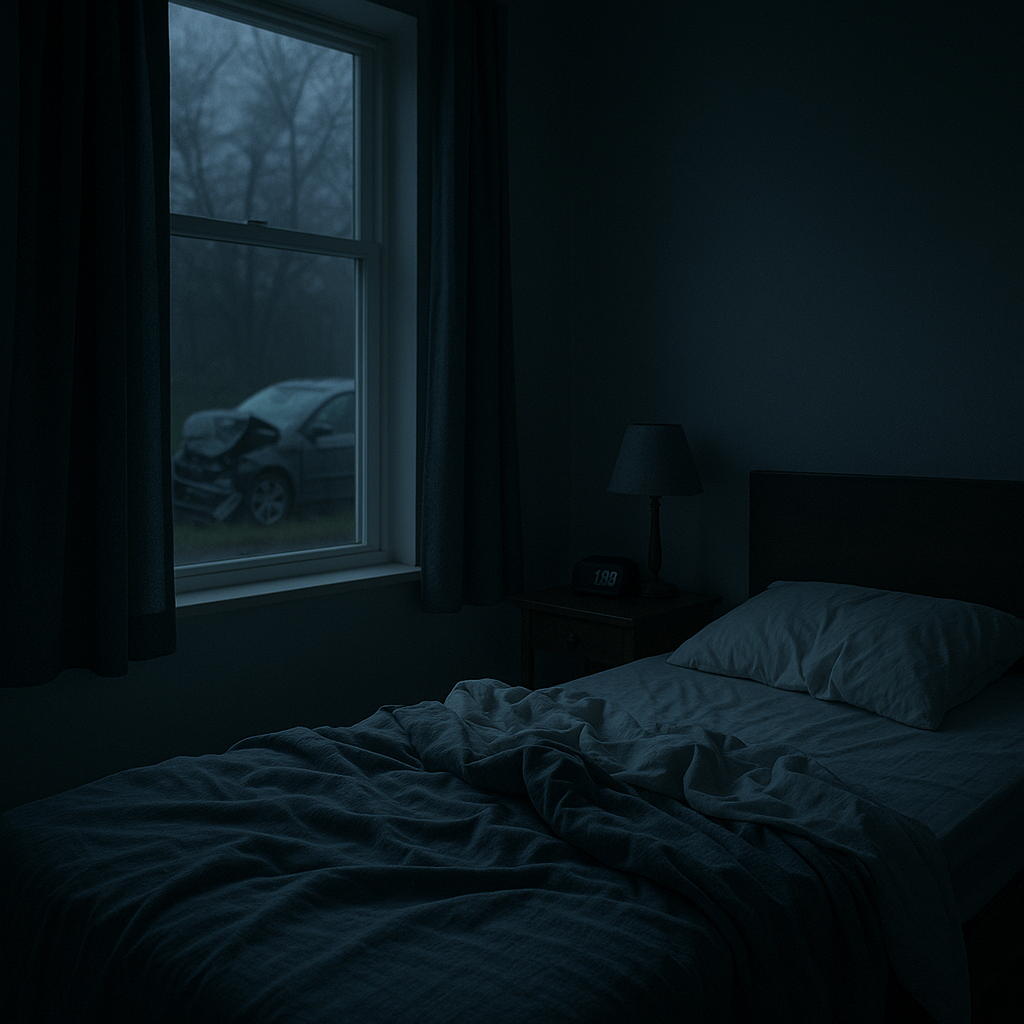
Why Do I Keep Waking Up at Night Since the Crash?
Why This Question Is Common After Severe Accidents
It is not unusual to wonder, “Why do I keep waking up at night since the crash?” Experiences of disrupted sleep or frequent awakenings are widely reported after people experience severe accidents such as car crashes or other traumatic events. These incidents often come with a sudden rush of emotional and physical stress, and lingering symptoms can surface at unexpected times — nighttime being one of the most noticeable.
In the days, weeks, or even months after a crash, routines and patterns that once felt normal can change. Sleep is one of the first areas where this shift may be observed. Many find themselves waking up frequently during the night, sometimes with recollections of the event, a sense of unrest, or simply a feeling that something isn’t quite right. This question is common because sleep is both fundamental to recovery and the first place the impact of trauma might become unavoidable.
Clear Neutral Explanation
Waking up at night since a crash is often attributed to both the body’s and mind’s reaction to trauma. Physically, a crash can cause injuries, pain, or discomfort that can make restful, uninterrupted sleep challenging. Even minor injuries can translate into shifts in sleeping positions or sensitivity, causing more frequent awakenings.
Beyond physical factors, psychological responses can play a significant role. The brain continues to process the event long after it is over. Stress, anxiety, or even the persistent vigilance that helped during the accident can linger. The mind may react to benign nighttime noises or bodily sensations with increased alertness, triggering awakenings.
Sleep cycles themselves are sensitive to emotional strain. During normal sleep, the body and brain cycle through different stages, including deep sleep and REM (rapid eye movement) sleep, where vivid dreaming occurs. After a traumatic incident, these cycles can be disrupted. People may wake up more easily, and their sleep may become lighter or less restorative. Memories or emotions associated with the crash can surface as nightmares or distressing dreams, leading to further awakenings.
Helpful Emotional Context
There can be a wide range of emotional responses after an accident, and disrupted sleep may feel like a minor inconvenience or a significant challenge, depending on the individual. Experiencing restless nights often brings a mix of worry, frustration, and even self-blame, especially if sleep was never an issue before. It is important to recognize that these reactions are common and natural after frightening or jarring events.
Waking up at night is not a sign of weakness or failure to “move on” from the crash. Instead, it can be viewed as the mind’s effort to adjust and create a sense of safety. The brain may remain in a heightened state of alertness because it is still processing what happened. Emotions that seem unrelated—such as irritability, worry, sadness, or fear—can surface more strongly at night when daily distractions are gone.
For many, there is comfort in knowing that these responses are shared by others who have gone through similar events. The nights may feel long and lonely, but the underlying reaction is a deeply human one, rooted in the brain’s mechanism for coping with distress.
Common Misconceptions
There are several misconceptions surrounding the experience of waking up at night after a crash:
– “It means I’m not recovering.” Some people interpret nighttime awakenings as a sign that they are failing to recover or that their progress is stalled. In reality, disrupted sleep is a common part of the aftermath for many survivors.
– “This will last forever.” Persistent sleep problems can feel permanent in the moment. However, for most people, these disruptions lessen in frequency or intensity over time as the brain and body process the event.
– “Others don’t struggle like this.” Comparisons to others’ recovery stories are frequent, yet each person’s response to trauma is unique. Waking up at night is a widely reported response, even if it is not always spoken about openly.
– “Something is wrong with me.” The idea that sleep disturbances following a traumatic event indicate some sort of personal flaw is deeply ingrained but unfounded. Such symptoms are an expected part of the mind and body’s response to trauma.
Acknowledging these misconceptions can help counter the additional stress they sometimes create and refocus on the understanding that these reactions are common and manageable.
Closing Paragraph
Waking up at night since a crash is a frequent and recognizable experience for many individuals recovering from severe accidents. Whether due to lingering physical discomfort or the psychological impact of trauma, interruptions to sleep are natural responses as the mind and body adjust. The nights might feel challenging, but they reflect deep, instinctive ways humans process distressing events. Understanding that this is part of the recovery process, rather than a setback or personal failing, is a helpful step in navigating the aftermath and in finding patience with oneself during this time.