
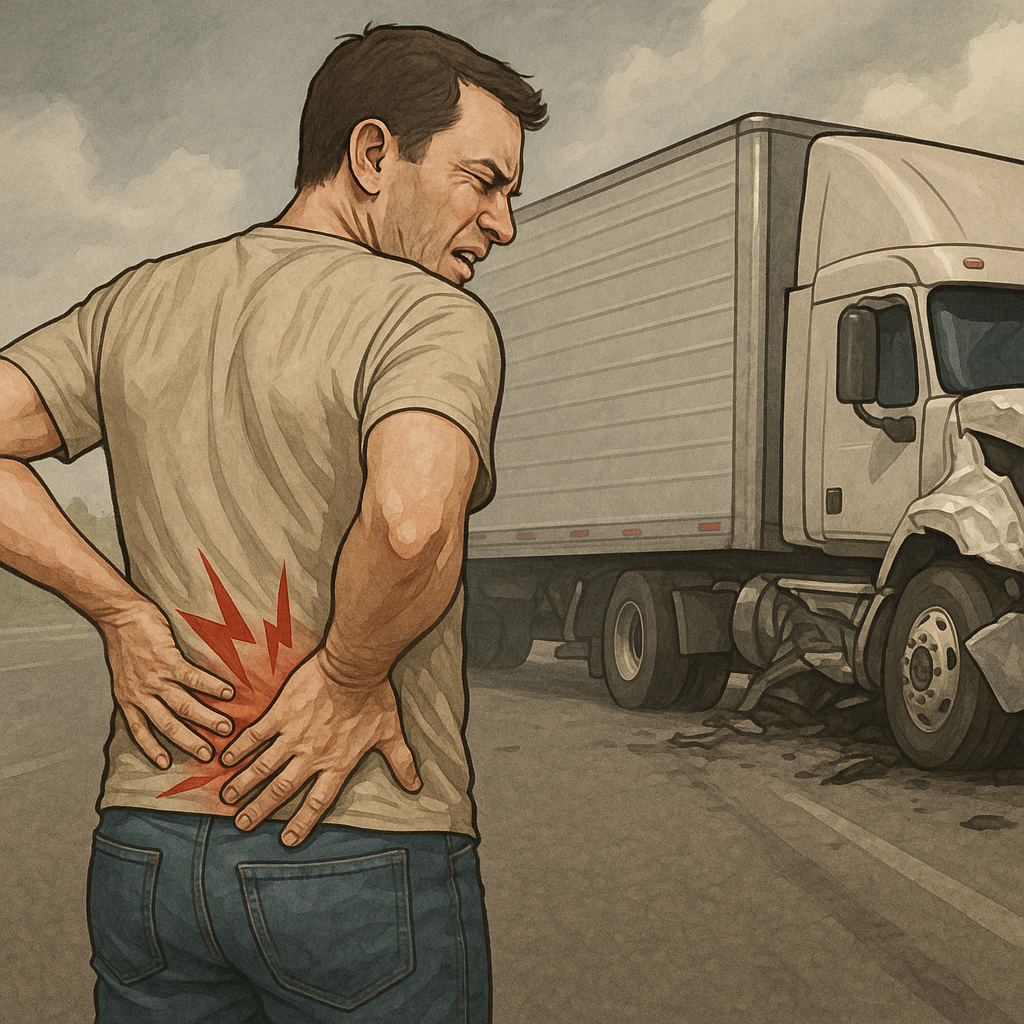
Lower Back Pain After Semi Truck Accidents
Semi truck accidents can have significant physical and emotional impacts on those involved, even in seemingly minor collisions. One of the most commonly reported concerns following these types of accidents is lower back pain. Understanding why symptoms like lower back pain develop, how they can evolve, and when individuals typically notice and monitor these symptoms can help shed light on this complex issue.
Why Symptoms Can Appear After Truck Accidents
Semi truck accidents transmit considerable force to the bodies of drivers and passengers in both the truck and any other vehicles involved. The sheer size and weight of a semi truck mean that even a low-speed collision can create an intense jolt, particularly to the spine and muscles in the lower back. During an accident, the body often absorbs not just the physical impact, but also the psychological stress and adrenaline surge associated with a traumatic event.
This combination of forces and stress responses can affect the body in ways that are sometimes not immediately obvious. The sudden movement from a collision may strain muscles, ligaments, and other soft tissues around the lumbar region. In some cases, the effects are felt right away; in others, symptoms like lower back pain may take hours or even days to fully manifest.
Additionally, the body’s initial response to trauma is often to release chemicals that can mask pain. This protective mechanism may delay the onset of discomfort or make initial symptoms seem minor compared to what emerges later.
Common Symptom Patterns (No Medical Instructions)
Individuals who experience lower back pain after a semi truck accident often report certain patterns of discomfort. This pain may present in various ways, including:
– Aching or Stiffness: Many people experience a persistent ache or stiffness in the lower back area. This can become more pronounced with movement or after periods of inactivity.
– Sharp Twinges: Some may notice sudden, sharp twinges of pain when changing position, getting up from a seated position, or bending.
– Radiating Sensations: In some cases, people describe sensations that seem to “radiate” from the lower back to the hips, buttocks, or even down the legs.
– Limited Mobility: Lower back pain sometimes coincides with reduced flexibility or difficulty performing everyday movements, such as standing up straight or walking.
– Sensitivity to Pressure: The lower back region may also feel tender or sensitive to pressure, touch, or even minor bumps.
It’s important to note that the nature and intensity of symptoms can greatly vary depending on the specifics of the accident and individual factors.
Why Symptoms Can Change Over Time
Lower back pain after a semi truck accident is not always static—symptoms can evolve, intensify, or improve over time. Several factors contribute to these changes:
– Delayed Onset: As adrenaline and endorphin levels decrease after the initial shock, underlying pain and discomfort can become more apparent.
– Inflammatory Response: The body’s natural response to injury often includes inflammation, which can increase over several days and may lead to swelling, increased sensitivity, and greater discomfort.
– Compensatory Behaviors: People sometimes adjust their posture, movement, or daily activities to avoid discomfort, which can place additional strain on other areas of the back or body, potentially leading to new sensations or patterns of pain.
– Activity Level Changes: The level of activity in the days or weeks following an accident can also affect how symptoms are perceived. Resuming demanding physical activities too soon or remaining immobile for long periods can each provoke different responses from the lower back.
– Emotional and Psychological Effects: Stress, anxiety, and disrupted sleep after a traumatic incident can also influence the perception and intensity of physical symptoms, including lower back pain.
Because of these factors, it’s common for symptoms to “come and go,” fluctuate in severity, or seem different at various times of day.
When People Typically Start Monitoring Symptoms
After a semi truck accident, people’s awareness of their physical state often evolves. In the immediate aftermath, adrenaline and the urgency of dealing with practical matters (like police reports or medical evaluation) can overshadow less obvious discomforts. Many people may not notice lower back pain right away, especially if they’re focused on more visible injuries or emotional shock.
In the hours and days following the accident, individuals often become more attuned to aches, pains, or stiffness emerging in the lower back. This delayed realization can occur once adrenaline subsides and the body transitions from a state of crisis management to recovery. It’s at this point that many people start to monitor symptoms—paying attention to how discomfort changes with certain movements or as time passes.
Family members, friends, or colleagues may also notice behavioral changes, such as reduced mobility or hesitance to perform specific tasks, prompting further awareness and monitoring of lower back pain. In some cases, regular daily activities—like getting dressed, sitting at a desk, or driving—act as reminders of emerging discomfort.
People may begin to keep informal notes about their pain patterns, frequency, and triggers, particularly if symptoms persist or interfere with routines. This growing attention to symptoms can guide decisions about seeking further evaluation, adjusting activity levels, or discussing ongoing discomfort with others.
Neutral Closing Paragraph
Experiencing lower back pain after a semi truck accident is not uncommon and can present in numerous ways. The pattern and intensity of pain often change over time, influenced by a range of physical and psychological factors. By understanding the factors behind the onset and development of these symptoms, individuals can be more aware of their own experiences and responses after such incidents. Increasing self-awareness and attunement to physical changes is an important aspect of overall well-being, especially after experiencing a significant event like a semi truck accident.