
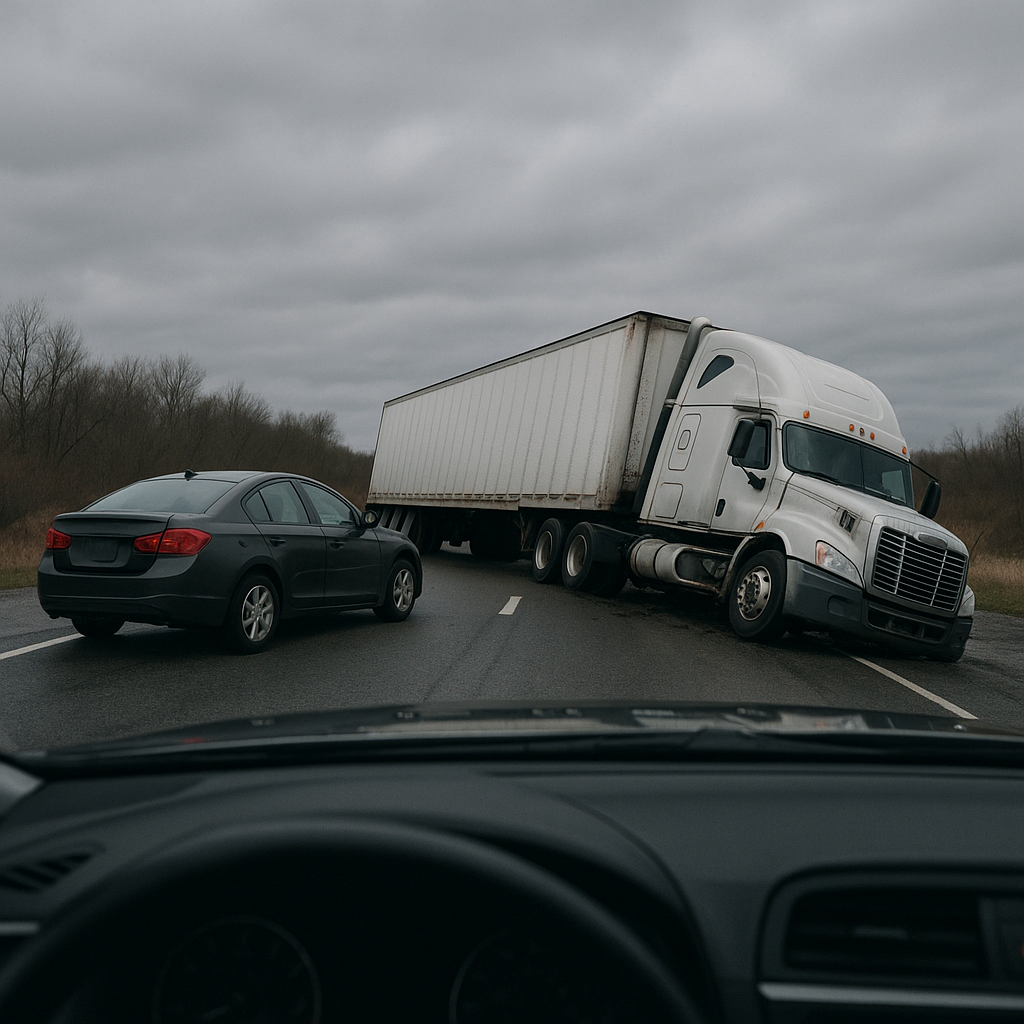
Why Do I Feel Scared to Drive After a Semi Truck Accident?
Why This Question Is Common After Severe Accidents
The question, “Why do I feel scared to drive after a semi truck accident?” echoes the concerns of countless individuals who have experienced traumatic roadway events. Semi truck accidents, due to their magnitude and the potential for harm, can alter one’s approach to driving, sometimes for an extended period after the accident itself. The fear that emerges in the aftermath of such incidents is a frequent topic among survivors, and it is not uncommon for individuals to question the intensity or persistence of their emotional responses.
Large vehicle collisions often feature abrupt, overwhelming forces that can shatter the sense of safety individuals once felt while on the road. The fear isn’t just about the specific accident; it can attach itself to driving as a whole, turning what was once a routine activity into a source of anxiety. This line of questioning is natural, and acknowledging the widespread nature of these feelings can be the first step in understanding them.
Clear Neutral Explanation
A semi truck accident is a profoundly distressing event. The size and power of these vehicles mean that accidents are often more serious compared to those involving only smaller cars. The psychological response that follows—such as feeling scared to drive after a semi truck accident—can be attributed to several factors.
The human brain is wired to protect us from danger. After a traumatic event, such as a severe accident, the brain often records the circumstances surrounding the trauma in powerful detail. When a person tries to return to driving, the brain may signal alarm, even when it is objectively safe. This process is an example of a natural protective mechanism at work—the mind is attempting to avoid a recurrence of danger.
In the context of a semi truck accident, the scale of the event may intensify this response. Witnessing or experiencing a massive vehicle lose control, seeing significant damage, or hearing loud, alarming sounds can leave deep impressions on one’s memory. These imprints may manifest as heightened caution, anxiety, or outright fear when faced with similar driving situations.
For some, even the thought of getting behind the wheel, seeing large trucks, or hearing sirens can trigger memories of the event, leading to a stress response. This is not unusual and can be a part of the mind’s effort to process what happened, even if it sometimes feels overwhelming.
Helpful Emotional Context
It is important to recognize that fear is a valid emotional response following a traumatic event, particularly one involving physical danger. Feeling scared to drive after a semi truck accident is not a sign of weakness or irrationality. Emotions serve important functions, often arising as a way for the mind and body to signal a need for caution or care.
The mix of emotions that can follow such an accident—fear, anger, sadness, vulnerability, or even numbness—reflects the complex nature of trauma. Individuals might find themselves reliving moments from the accident, experiencing intrusive thoughts, or feeling tense or hyper-aware on the road. These strong reactions are rooted in a natural human desire to avoid harm and regain control after a loss of safety.
Social and cultural factors can influence how these emotions are processed. People may feel pressured to “bounce back” quickly, but the psychological recovery from a traumatic accident can take longer than the healing of physical injuries. It’s common for survivors to experience a wide range of responses, and each individual’s emotional timeline and needs may look very different.
Common Misconceptions
Certain misconceptions can add unnecessary stress to those feeling scared to drive after a semi truck accident. A frequent misunderstanding is that this fear should fade quickly or that continued anxiety is somehow a personal failing. In reality, recovery from trauma varies greatly among individuals, and there is no ‘correct’ timeline for regaining confidence behind the wheel.
Another misconception is that strong emotional reactions only happen to people involved in very severe accidents. Even in situations where physical injuries are minor, the sense of danger and helplessness during an accident can lead to lasting feelings of fear.
Some assume that these fears are easily overcome by simply getting back on the road. While practice can be helpful for some, the fear may persist or even intensify without understanding or processing the underlying trauma. Judgment from others or internal expectations to quickly “move on” can complicate recovery and add layers of guilt or frustration to what is already a challenging situation.
Acknowledging the legitimacy of emotional and psychological responses after a semi truck accident is an important part of understanding oneself and the road back to a sense of safety.
Closing Paragraph
Feeling scared to drive after a semi truck accident is a common and understandable experience. The shock of the event, the body’s intrinsic response to fear, and the lingering memories can all contribute to ongoing anxiety behind the wheel. Recognizing these reactions as part of the mind’s natural effort to make sense of trauma can provide reassurance. Each person’s journey toward regaining comfort as a driver is unique, shaped by individual experiences and emotions. Over time, understanding and acceptance of these feelings often play an important role in moving forward after such a significant event.