
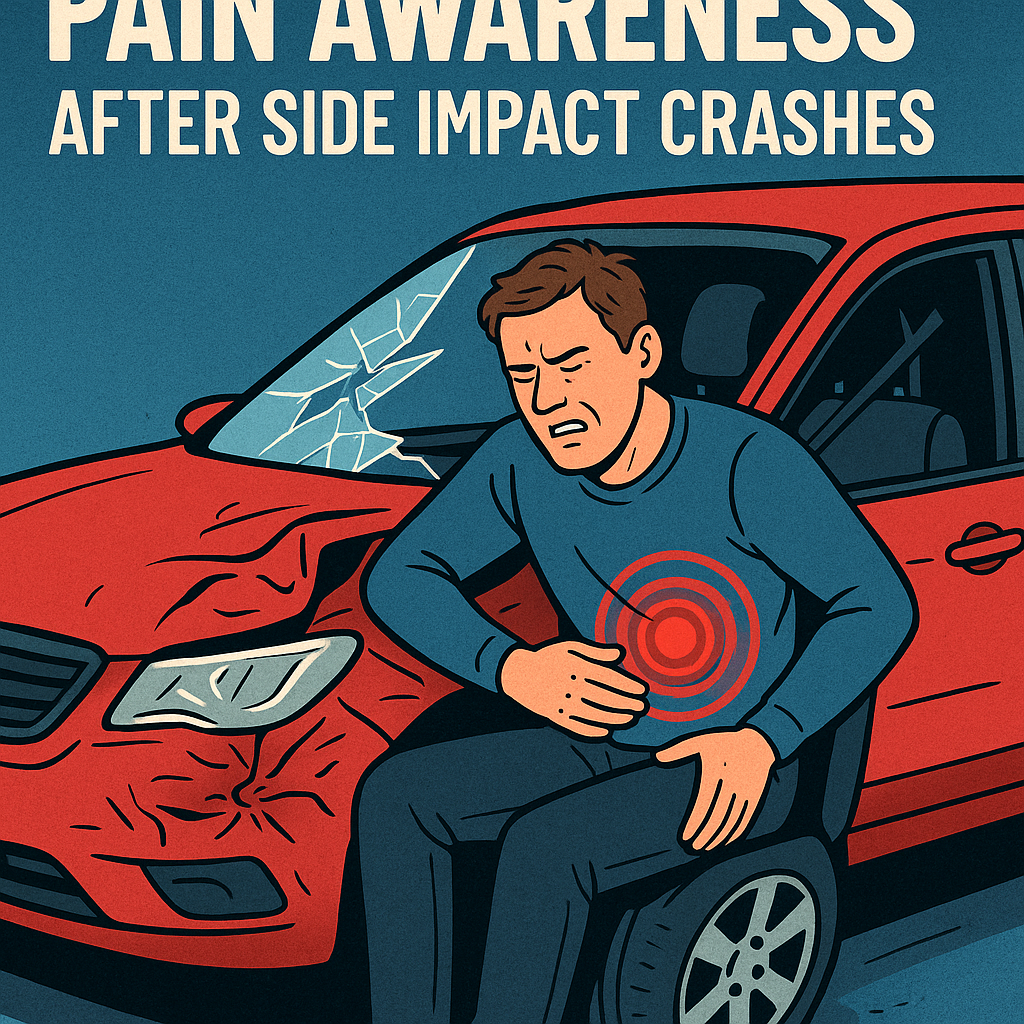
Pain Awareness After Side Impact Crashes
Every year, thousands of people experience car crashes that involve a direct hit to the side of their vehicle, also known as a “T-bone” or side impact collision. These accidents often bring unique challenges, particularly when it comes to understanding and identifying pain or discomfort after the crash. Enhancing side impact pain awareness can help individuals better monitor their symptoms and seek support if needed.
Why Symptoms Can Appear After Truck Accidents
Truck accidents, especially those involving side impacts, expose the body to significant forces. Unlike front or rear-end collisions, side impacts can jostle occupants in unpredictable ways, often subjecting the neck, shoulders, torso, and hips to sudden movement. The structure of most passenger vehicles offers less protection from side collisions compared to front or rear impacts, as the door is often the only barrier between occupants and the striking vehicle.
After a collision with a larger vehicle like a truck, it’s not uncommon for individuals to walk away feeling relatively unscathed. However, the human body’s stress response during accidents can play a role in masking sensations of pain or discomfort. Adrenaline rushes may temporarily reduce the perception of pain. As the initial shock and stress subside, individuals may begin to notice new or intensifying symptoms.
The complex nature of side collisions—where the force is delivered asymmetrically and nearly always unexpectedly—means that pain or discomfort might not surface until hours, days, or even weeks later. This delayed onset can sometimes make it difficult to immediately connect aches and pains with the accident itself.
Common Symptom Patterns (No Medical Instructions)
After a side impact crash, people might observe a variety of sensations that signal the body’s response to strain, jolts, or abrupt movements:
– Neck and Shoulder Soreness: Side impacts often cause the head and neck to move suddenly, possibly resulting in stiffness, soreness, or mild aches in these areas.
– Back Discomfort: The torso can twist or bend in unexpected directions during a side collision. People might notice soreness along the spine, in the lower or mid-back, or even across the shoulders.
– Abdominal and Hip Sensations: The seat belt, door, or center console may press against these areas more forcefully in a side impact, potentially leading to feelings of bruising or tenderness.
– Arm or Leg Aches: The side nearest to the crash may experience more pressure or force, causing limbs on that side to be more sensitive or sore.
– Generalized Fatigue or Discomfort: Beyond specific aches, individuals may encounter a sense of tiredness or overall discomfort as the body recovers from the incident.
It is essential to recognize that everyone’s experience is unique. Some may feel fine immediately after a side impact, only to have symptoms emerge later. Others may have immediate discomfort that shifts or evolves during the days that follow.
Why Symptoms Can Change Over Time
One of the more perplexing aspects of side impact pain awareness is the changing nature of symptoms in the days and weeks after the accident. Several factors contribute to this evolution:
– Delayed Response: Some aches or sensations arise only after the initial adrenaline and shock have worn off.
– Inflammation and Swelling: The body’s natural healing process involves an inflammatory response, which can make some areas feel stiffer or more sensitive in the days after the accident.
– Compensation Patterns: As the body adapts to discomfort, individuals may adjust their posture or movement in ways that lead to new sensations in other parts of the body.
– Awareness and Focus: In the days following a crash, increased attention to bodily sensations may make people more aware of discomfort that they didn’t initially notice.
Understanding that symptoms can shift, intensify, or diminish over time is an essential part of maintaining awareness after a side impact crash. Monitoring these changes can help individuals recognize how their body is responding, and whether continued observation is needed.
When People Typically Start Monitoring Symptoms
Many individuals begin to monitor their symptoms immediately after a side impact collision, especially if the event was dramatic or if there are obvious signs of discomfort. However, it is not unusual for people to overlook or minimize their symptoms in the initial aftermath, particularly if they feel relief at having avoided serious harm.
Monitoring for side impact pain awareness usually picks up in the hours or days following the crash. When the body’s stress hormones subside and the mind has time to process the event, subtle aches and pains can become more noticeable.
Some specific triggers that prompt more vigilant symptom monitoring include:
– Waking up the next day with soreness
– Difficulty performing usual daily activities
– Family, friends, or colleagues noticing behavioral changes
– Reminders from medical professionals or insurance providers to observe for symptoms
– Returning to routine activities, such as work or exercise, and noticing limitations
By staying attentive to their bodies and tracking any emerging or changing discomforts, individuals are better equipped to understand the full impact of the accident.
Neutral Closing Paragraph
Increasing side impact pain awareness empowers individuals to better observe how their bodies respond after a crash. While symptoms may appear and change over time, staying informed about common patterns and the reasons behind them can help people navigate the period following a side impact collision with greater confidence and clarity. Being attentive and patient with oneself during this process supports personal well-being and informed decision-making.