
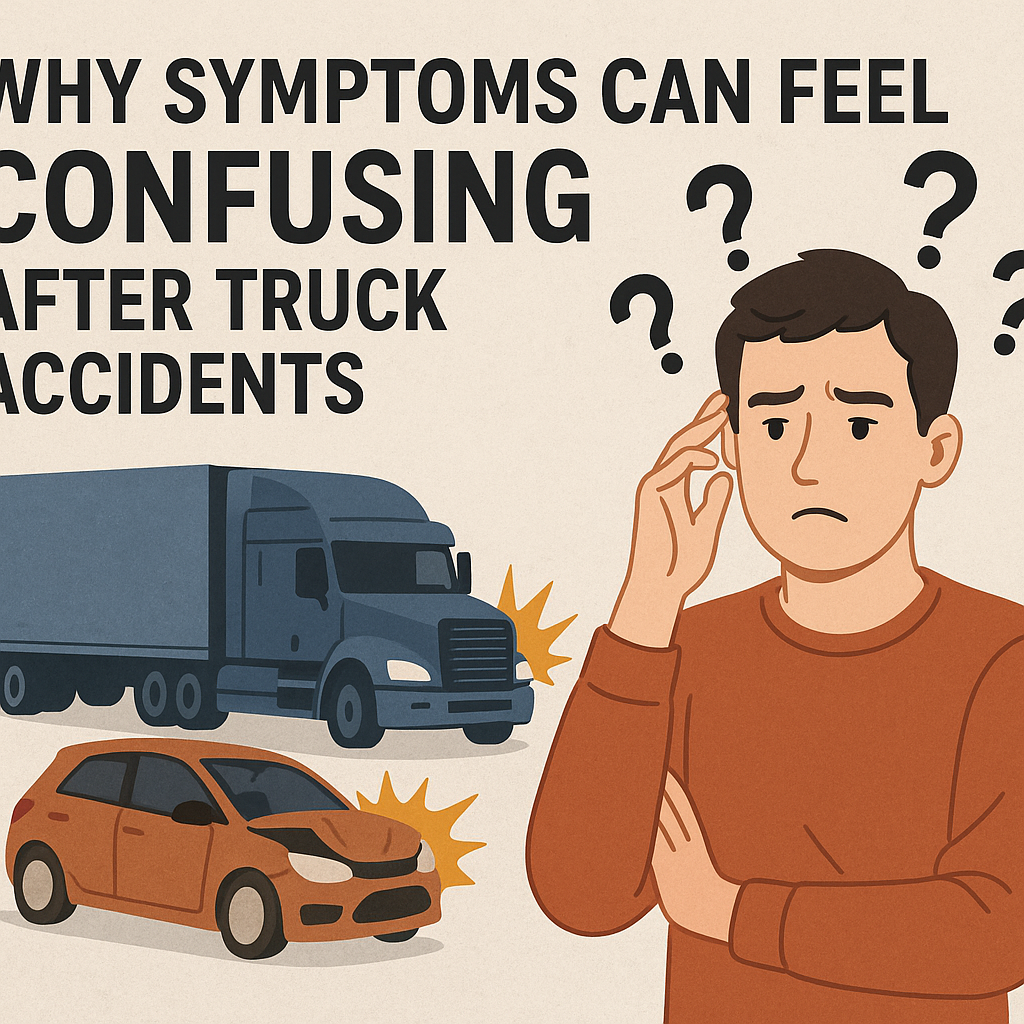
Why Symptoms Can Feel Confusing After Truck Accidents
Truck accidents are sudden, impactful events that can leave individuals grappling with a range of physical and emotional challenges. One of the most bewildering aspects following such incidents is the way symptoms can feel confusing—sometimes emerging unexpectedly, shifting over time, or even seeming unrelated to the event. Understanding why symptoms can feel confusing after a truck accident is an important step for anyone seeking clarity about their post-accident experiences.
Why Symptoms Can Appear After Truck Accidents
Truck accidents are, by nature, intense and often traumatic encounters. Unlike minor bumps or low-speed collisions, truck accidents typically involve significant forces. These forces can cause the body to react in complex and unpredictable ways. Sometimes, the adrenaline rush that occurs during a crash can mask discomfort or other sensations in the moments immediately afterward. As the biological effects of adrenaline fade, previously hidden symptoms may surface.
The physical momentum and the size of trucks often result in injuries that don’t always show clear signs right away. Besides immediate effects, the psychological impact of a traumatic event can also influence how and when symptoms become noticeable. Emotional stress, anxiety, and shock may delay the recognition of certain feelings or bodily changes.
Furthermore, the multifaceted nature of the human body means that symptoms can originate from a variety of sources. Muscles, nerves, bones, and even internal organs may all react differently to impact. This complexity can make it difficult for individuals to attribute what they feel to specific causes, adding to the overall sense of confusion.
Common Symptom Patterns (No Medical Instructions)
After a truck accident, people may notice a variety of symptom patterns. While everyone’s experience is unique, some commonly reported patterns include:
– Delayed Onset: Sometimes, individuals feel fine immediately after the accident, only to experience discomfort hours or days later. This delay can be surprising and make it harder to connect symptoms with the crash.
– Changing Locations: Discomfort may initially appear in one area of the body and later shift or expand to other regions. For example, someone might notice stiffness in the neck that later gives way to soreness in the back or legs.
– Varying Intensities: The intensity of symptoms can also fluctuate. At times, someone might only notice mild tightness, while at other times, the feeling could become more pronounced or noticeable after certain activities.
– Physical and Emotional Interplay: It’s not uncommon for individuals to notice both bodily and emotional changes. Stress, anxiety, or trouble sleeping may accompany or even amplify physical sensations. This interplay can make it more challenging to interpret what’s being experienced.
– Sensations That Seem Unrelated: Some people are puzzled by symptoms that don’t seem logically connected to the accident, such as headaches, dizziness, or tingling in the hands or feet.
These varied patterns can create a confusing experience, with symptoms that come and go or appear disconnected from the initial incident.
Why Symptoms Can Change Over Time
The hours, days, and even weeks after a truck accident may bring evolving sensations. Several factors contribute to why these symptoms can change over time:
– Body’s Natural Healing Response: Inflammation and swelling might develop gradually, leading to new or changing sensations. The body’s attempt to heal itself can mean that symptoms shift in location or quality as tissues respond to the initial trauma.
– Activity Levels: Resuming daily activities or attempting physically demanding tasks can highlight or exacerbate certain sensations that were otherwise unnoticed at rest.
– Psychological Processing: As the initial shock wanes, more subtle signs may become apparent. Emotional states like anxiety or worry can also affect how physical symptoms are perceived and experienced.
– Cumulative Effects: Some symptoms may be the result of cumulative responses, such as sleeping in an unusual position to avoid discomfort, which in turn can lead to new aches or pains.
– Unmasking Effects: Initial numbness, often due to adrenaline, can fade, revealing sensations that were previously hidden.
This constantly shifting landscape can leave individuals feeling uncertain about what’s happening in their own bodies.
When People Typically Start Monitoring Symptoms
After a truck accident, the timing of when people begin actively monitoring symptoms varies. Some may notice changes immediately and keep track right away, while others might take days to realize something feels off. Often, the decision to start monitoring symptoms is prompted by:
– Advice from friends, family, or professionals who suggest paying close attention to changes in the aftermath.
– Noticing new or worsening sensations that prompt reflection on recent events.
– Administrative or legal processes that require documentation of changes, such as insurance claims or workplace forms.
– A delayed but persistent onset of symptoms that don’t resolve as expected.
The process of monitoring what’s happening can be challenging, especially when symptoms are unpredictable, inconsistent, or confusing. Still, many find it helpful as a way to make sense of their experiences and communicate what they’re feeling to others.
Neutral Closing Paragraph
Truck accidents can lead to a variety of sensations and experiences that may seem confusing, unpredictable, or even unrelated to the incident itself. By understanding why symptoms might arise, change, or seem inconsistent, individuals can better navigate the aftermath. Everyone’s response is unique, and the complexity of the body’s reactions contributes to the sense of confusion many people report. Educating oneself about these patterns can provide some reassurance, helping individuals piece together their experiences as they move forward.