
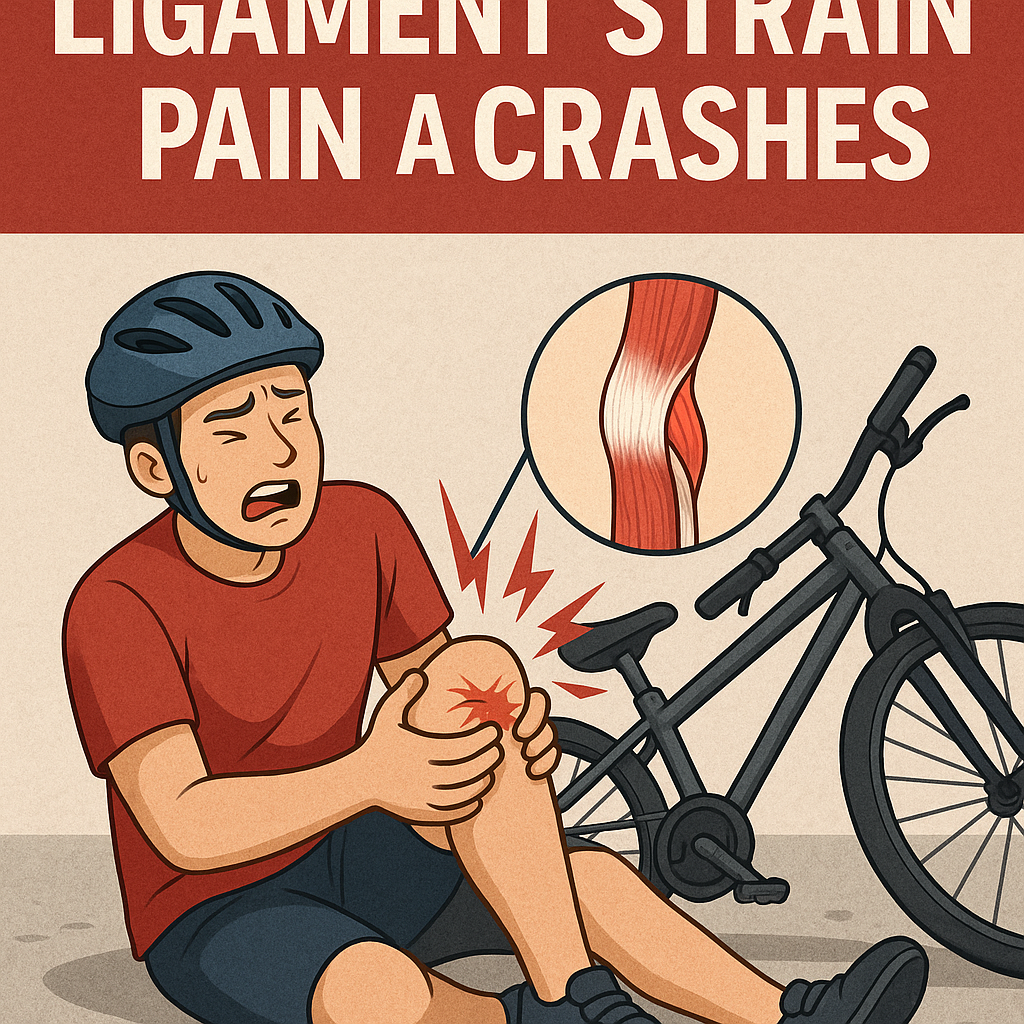
Ligament Strain Pain After Crashes
Ligaments are strong bands of connective tissue that stabilize joints and guide motion. A sudden force—like the impact from a truck accident—can stretch or tear these tissues, resulting in what’s known as a ligament strain. Experiencing ligament strain pain after a crash is common, but the way these symptoms appear, evolve, and are noticed often surprises accident survivors. This article explores why ligament strain pain is often noticed after crashes, how its symptoms may unfold, and when most people start paying attention to potential warning signs.
Why Symptoms Can Appear After Truck Accidents
Truck accidents are uniquely intense events. The sheer size and weight of a truck generate forces far beyond most daily experiences, even at lower speeds. When a crash occurs, the body is often subjected to rapid movements, stops, and changes in direction. Even with protective devices like seat belts and airbags, these forces can cause the body to move in unintended ways.
Ligaments are naturally flexible, but there is a limit to how much stretch they can handle. In a crash, sudden jerking or twisting of the body can push these tissues beyond their normal range. For instance, the neck might snap forward and back (often referred to as whiplash), or a knee could twist unnaturally. This overstretching may cause microscopic fibers within the ligament to tear, resulting in pain or discomfort.
However, it is important to note that ligament strain pain after a crash might not be immediately obvious. The body’s natural stress response, including a surge of adrenaline, can temporarily mask discomfort. Often, survivors of truck accidents walk away seemingly unscathed, only to notice soreness or restricted movement hours or even days later.
Common Symptom Patterns (No Medical Instructions)
Ligament strain pain following a crash can come in various forms. People might report a deep, aching sensation around a joint, especially when moving it. Sometimes, the pain appears only with certain activities—turning the head, bending the knee, or lifting an arm, for example. The discomfort may be persistent or fade and then return unexpectedly.
Swelling or minor bruising around a joint can sometimes accompany ligament strain, but not always. Stiffness is another frequent complaint, as strained ligaments may signal the surrounding muscles to tighten in a protective response. Some people notice a reduced range of motion. Simple everyday tasks—climbing stairs, reaching for an object, or even walking—can suddenly feel more taxing than before.
After a truck crash, ligament strain pain may also combine with symptoms like fatigue or general soreness throughout the body, making it challenging to pinpoint the source. This mix of physical sensations highlights why ligament strain pain after a crash can sometimes be subtle and easily overlooked in the initial aftermath.
Why Symptoms Can Change Over Time
Ligament strain pain is not always a constant sensation. After the initial injury, the body’s natural healing processes get underway. Inflammation is a key stage, and it can develop slowly after a crash. This means symptoms might intensify over the course of several hours or even days, as the area becomes tender and possibly swollen.
Moreover, activity can cause shifting symptoms. A joint that feels only a little sore while at rest may hurt more after being used, or vice versa. Some people experience “good days” and “bad days,” where pain levels fluctuate unpredictably. This variability is normal when it comes to ligament strains.
Another factor is compensatory movement. If one joint becomes painful, people often adjust their movements to avoid discomfort. Over time, this can lead to soreness in other parts of the body. As a result, individuals recovering from a crash may notice their pain “moves” or that new aches surface over time.
It is also common for people to become more aware of their symptoms as the initial shock of the accident fades. When the mind and body begin to process the event, a person’s attention shifts from the crash itself to lingering physical sensations.
When People Typically Start Monitoring Symptoms
Many people begin to monitor their symptoms only after the most dramatic phase of a crash has passed. Immediately after an accident, adrenaline and the urgency of the situation dominate attention. As hours or days unfold, individuals start to notice lingering aches, stiffness, or changes in joint functionality.
The timeline for paying attention to ligament strain pain after a crash varies widely. It can be common for someone to return home thinking they are uninjured, only to develop notable pain overnight or the following day. Minor injuries are often overlooked while immediate priorities—such as dealing with the insurance process or arranging transportation—take precedence.
In workplaces like trucking or logistics, there may be policies encouraging self-monitoring after accidents, but even then, personal awareness often grows gradually as the stress and chaos diminish. Family members or friends may also point out symptoms—such as someone moving more slowly than normal or wincing during certain movements—prompting the individual to begin tracking their discomfort.
Neutral Closing Paragraph
Understanding ligament strain pain after truck crashes helps shed light on why some symptoms aren’t felt immediately, how they may change, and why monitoring post-crash sensations is important. By being aware of the general patterns and timelines associated with ligament strain pain, individuals can be more attentive to changes in their well-being in the aftermath of a collision. While every situation is different, staying observant of evolving symptoms can be a useful way to support overall recovery and safety after such traumatic events.