
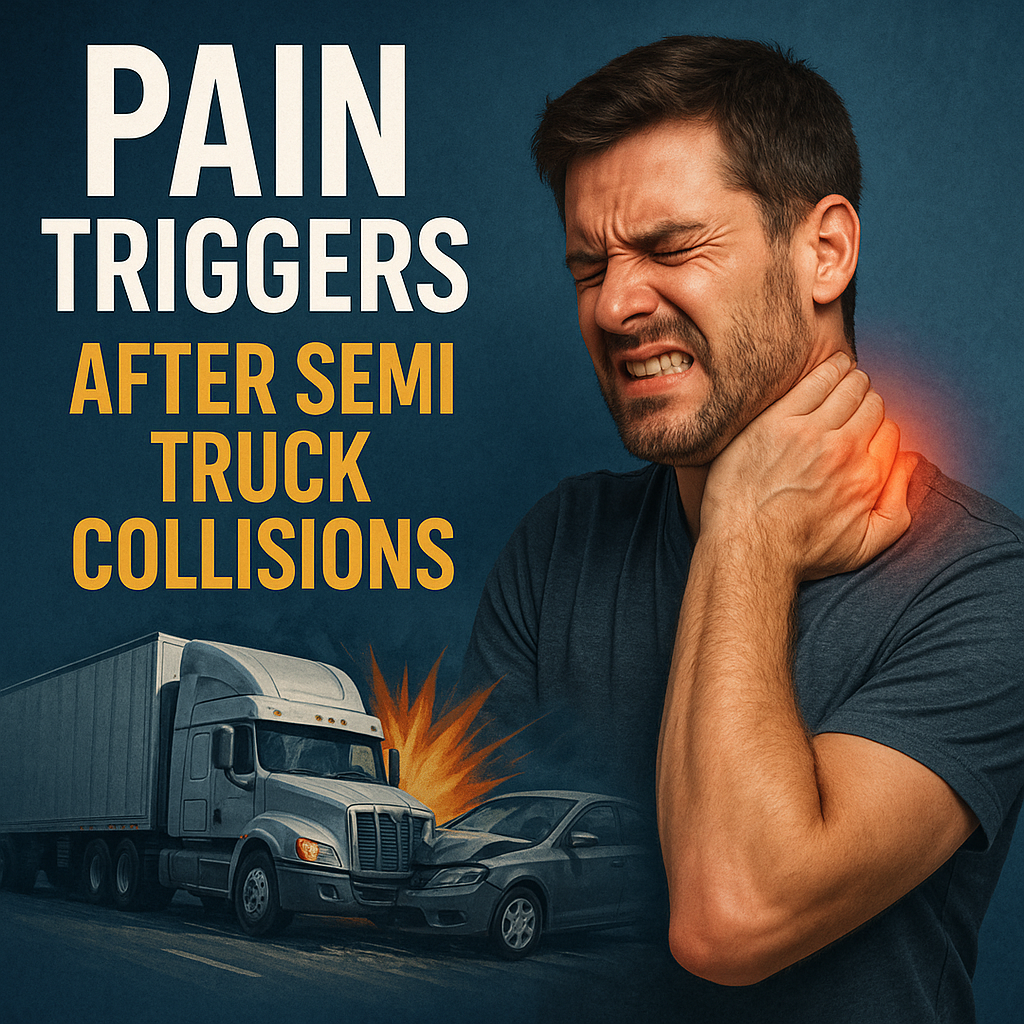
Pain Triggers After Semi Truck Collisions
Collisions involving semi trucks are uniquely hazardous due to their sheer size, weight, and force. While much attention is often paid to the immediate aftermath of such crashes, many people are surprised to learn that pain and related symptoms can develop or change in the hours, days, or even weeks that follow. Understanding the triggers and patterns of pain after a semi truck collision can help individuals be more aware of their recovery process and make informed decisions about their health and wellbeing.
Why Symptoms Can Appear After Truck Accidents
A semi truck collision exposes the human body to significant kinetic force, often far beyond what one might experience in everyday life or even in smaller vehicle accidents. This immense force can affect muscles, joints, and soft tissues, as well as the body’s internal processes, even if injuries are not immediately obvious.
Post-collision, the body experiences a flood of adrenaline and stress hormones. This rush can temporarily mask discomfort or pain. As these hormones subside, previously hidden symptoms might begin to surface. Additionally, inflammation—which might not be immediately noticeable—can develop in the hours or days following the event, further contributing to delayed symptom onset.
Another consideration is that psychological stress responses, including anxiety and heightened alertness, may also prompt physical symptoms to emerge after the initial fear or shock of the accident has worn off. The combination of physical impact and emotional response can lead to a wide variety of symptom patterns and pain triggers following a semi truck collision.
Common Symptom Patterns
Each individual’s response to a semi truck collision can be different, but there are some common patterns in the pain and discomfort that people report afterwards:
– Delayed Onset Pain: Pain in the neck, back, or other body parts may not manifest immediately but could develop over several hours or days. This delayed pain is often related to soft tissue stress.
– Worsening with Movement: Sometimes, pain presents or intensifies with specific movements, such as turning the head, bending over, or lifting. Normal daily activities can reveal sore or stiff areas that were not noticeable when at rest.
– Localized Symptoms: Pain or discomfort may be concentrated in certain areas that absorbed the brunt of the collision force—such as the shoulders from the seatbelt, or the knees from bracing against the dashboard.
– Radiating or Spreading Pain: It’s also common for discomfort to radiate from one area of the body to another, for instance, from the neck down the arm or from the lower back into the legs.
– Emotional and Sensory Triggers: Emotional stress, loud noises resembling the crash, or even reminders of the incident can sometimes bring about or intensify pain, highlighting the interplay between psychological and physical symptoms.
– Generalized Fatigue and Stiffness: After a major collision, the entire body can feel fatigued and stiff, as the stress of the event takes both a physical and emotional toll.
It’s important to note that these patterns do not constitute a diagnosis or a substitute for professional evaluation, but are common experiences reported after semi truck collisions.
Why Symptoms Can Change Over Time
The aftermath of a semi truck collision is rarely static. Pain and discomfort may fluctuate significantly in the days and weeks following the event. Several factors contribute to these changes:
– Inflammatory Response: The body’s inflammatory process can evolve, sometimes increasing discomfort several days after the initial incident before it starts to subside.
– Activity Levels: As injured tissues are rested or, conversely, as a person attempts to resume normal activity, they may experience shifts in pain intensity. Overuse or underuse of affected areas can contribute to changing symptoms.
– Emotional Factors: Psychological responses can affect physical symptoms. For example, increased stress or anxiety about the accident can worsen the perception of pain, while relaxation and reassurance can have the opposite effect.
– Secondary Adaptations: People may unconsciously change how they move, sit, or stand after a collision to avoid discomfort, which can inadvertently lead to new or shifting pain elsewhere in the body over time.
– Delayed Complications: Certain issues, such as muscle tightness or headaches, may emerge days or even weeks later, as the body continues to respond to the original trauma.
Fluctuations and changes in symptoms are part of the natural variability of the body’s response to trauma and stress.
When People Typically Start Monitoring Symptoms
After a semi truck collision, many individuals focus first on their immediate safety and the logistics of the accident scene. As a result, they may only begin to notice or monitor symptoms several hours or days later. This may occur when:
– The surge of adrenaline from the initial incident wears off and physical sensations become more pronounced.
– Routine activities, such as going to work, exercising, or simply moving around at home, trigger pain or discomfort.
– Friends, family, or colleagues notice changes in behavior or mobility and ask about physical well-being.
– Emotional processes slow down, increasing bodily awareness and attentiveness to subtle changes or aches.
People commonly start tracking their symptoms by noticing patterns—such as pain associated with specific movements or activities—or by keeping a simple diary of when discomfort is most prominent. For many, any changes in routine due to pain, such as missing work or avoiding hobbies, become cues to pay closer attention to their physical state.
Conclusion
Pain triggers after a semi truck collision can be diverse and evolve over time, influenced by both physical and emotional processes. While common pain patterns include delayed onset, increased discomfort with activity, and radiating symptoms, the timing and severity may vary widely from one person to another. Paying attention to these changes, and recognizing when symptoms begin or shift, is an important part of the post-collision experience. Being informed and attentive to the body’s signals facilitates a thoughtful approach to post-accident recovery.