
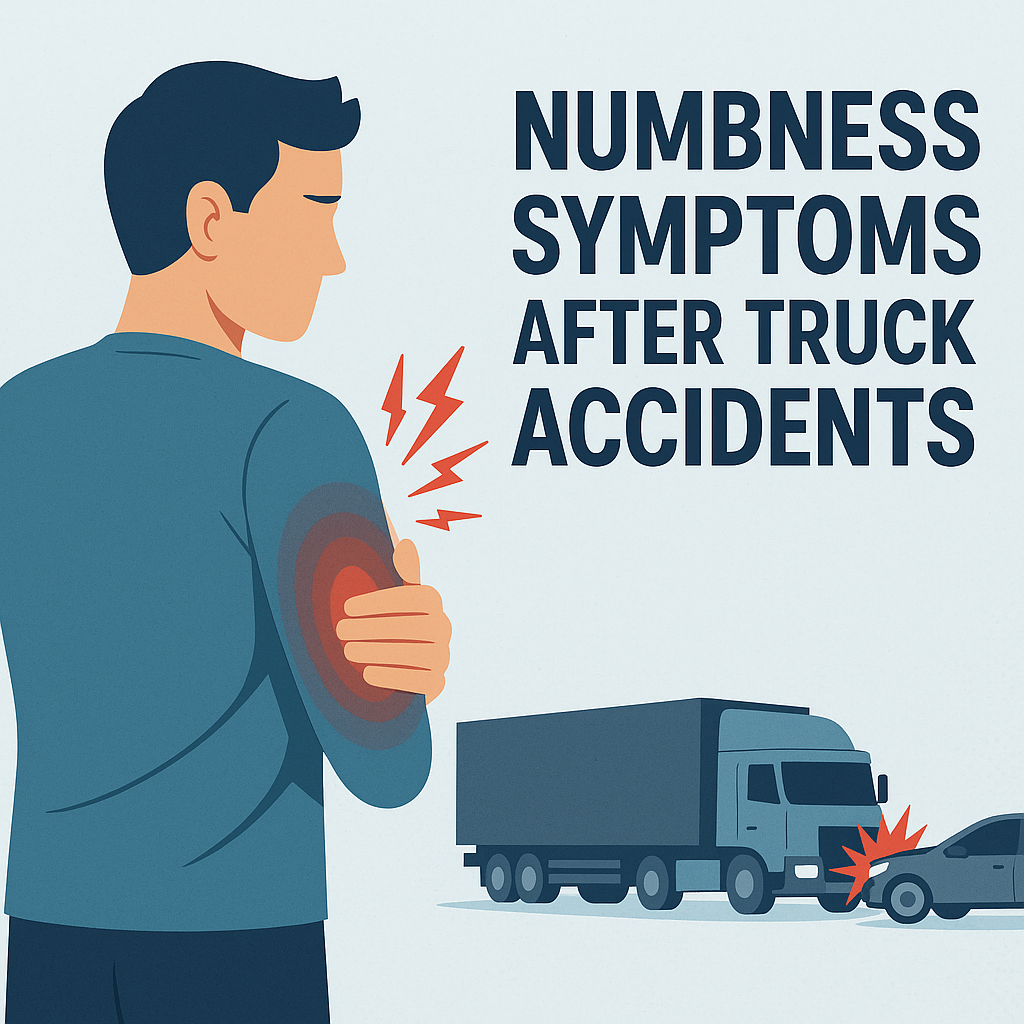
Numbness Symptoms After Truck Accidents
Truck accidents can have a profound and lasting impact on those involved, often resulting in a range of physical and sensory symptoms. Among these, numbness—an altered or diminished sensation—can be a particularly concerning and confusing issue. Understanding why numbness symptoms might occur after a truck accident, how they commonly present, and why their patterns may shift over time can offer valuable insight into the aftermath of such incidents.
Why Symptoms Can Appear After Truck Accidents
Truck accidents are frequently high-impact events. The force generated by a collision between a truck and another vehicle or object is significant, often leading to intense jolts, abrupt stops, or crush injuries. These forces can cause the body to move in unnatural ways, affecting bones, ligaments, muscles, and nerves.
Numbness symptoms after a truck accident might be related to the body’s immediate physical response to trauma. The sensation of numbness can occur if nerves are compressed, stretched, or otherwise disturbed by the impact. Even when injuries seem minor or delayed, the body’s intricate network of nerves might still be affected in subtle ways.
Additionally, the body’s stress response plays a role. Adrenaline released during the trauma can temporarily mask or alter sensory experiences, leading some people to notice symptoms hours or days after the event. As the body calms and the adrenaline subsides, underlying issues—such as numbness—may become more apparent.
Common Symptom Patterns
The patterns of numbness following a truck accident can vary widely, depending on the individual and the nature of the incident. Some of the most frequently reported scenarios include:
– Localized Numbness: This refers to numbness confined to a specific area such as the hands, arms, legs, or face. It may be experienced as a tingling, ‘pins and needles,’ or a total loss of sensation in one area.
– Intermittent Numbness: Some individuals note that their numbness comes and goes. It may fade with movement, intensify with certain activities, or appear seemingly at random.
– Widespread Numbness: Less commonly, numbness may be more diffuse, possibly encompassing multiple limbs or areas of the body.
– Associated Symptoms: Numbness is often reported alongside other sensations, such as tingling, weakness, heaviness, or a burning feeling.
The exact pattern can depend on many variables, including the point of impact in the accident, the position of the person at the time, and any existing medical or physical factors.
Why Symptoms Can Change Over Time
Another aspect of numbness after a truck accident is its variability. It is not unusual for the intensity, location, or character of numbness symptoms to change in the days or weeks following the event.
– Inflammation Response: In the immediate aftermath, swelling or inflammation around nerves can cause or worsen numbness. As the inflammation subsides, symptoms may improve or shift.
– Secondary Effects: Sometimes, changes in activity levels or movement after the accident can result in new or altered patterns of numbness. For instance, favoring one limb due to discomfort may place strain elsewhere in the body.
– Delayed Recognition: It is also possible for numbness to go unnoticed at first, either due to the overwhelming nature of the accident or because other symptoms overshadow it.
– Natural Healing Process: As the body begins to heal, nerves and tissues may recover at different rates, contributing to evolving symptom patterns.
The interplay between these factors can mean that numbness that was initially present resolves, but new areas may develop altered sensations. Patterns can be unpredictable and may require continued attention.
When People Typically Start Monitoring Symptoms
After a truck accident, most individuals begin to monitor their symptoms shortly after the event, though the timeline can vary significantly. In the immediate phase—ranging from several minutes to a few hours—shock and adrenaline often dominate, potentially downplaying physical sensations. As these effects wear off, many people become more attuned to their physical state and begin to notice new or changing symptoms, such as numbness.
Some individuals initiate self-monitoring because of immediate discomfort, while others may be prompted by delayed or new symptoms that arise in the days following the accident. The emergence of secondary symptoms, like tingling or weakness, can also spur closer attention. In many cases, external factors such as work obligations, physical limitations, or guidance from others can encourage more focused symptom tracking.
A significant number of people adopt a “wait and see” approach, observing symptoms to determine if they improve naturally over time. Others may feel proactive in noting even minor changes in how their body feels or functions, particularly if initial numbness evolves or additional symptoms develop.
Regardless of the approach, ongoing attention to physical sensations is common in the aftermath of a truck accident, especially when symptoms like numbness appear or change.
In Summary
Numbness symptoms after a truck accident can be unsettling and complex, reflecting the intricate interplay between the body’s nervous system and external trauma. While patterns and timing vary from one individual to another, being aware of changes and monitoring symptoms over time is a natural response to the uncertainties posed by high-impact accidents. Understanding these phenomena from an educational perspective can help those involved in truck accidents feel more informed and better prepared to track their health in the aftermath.