
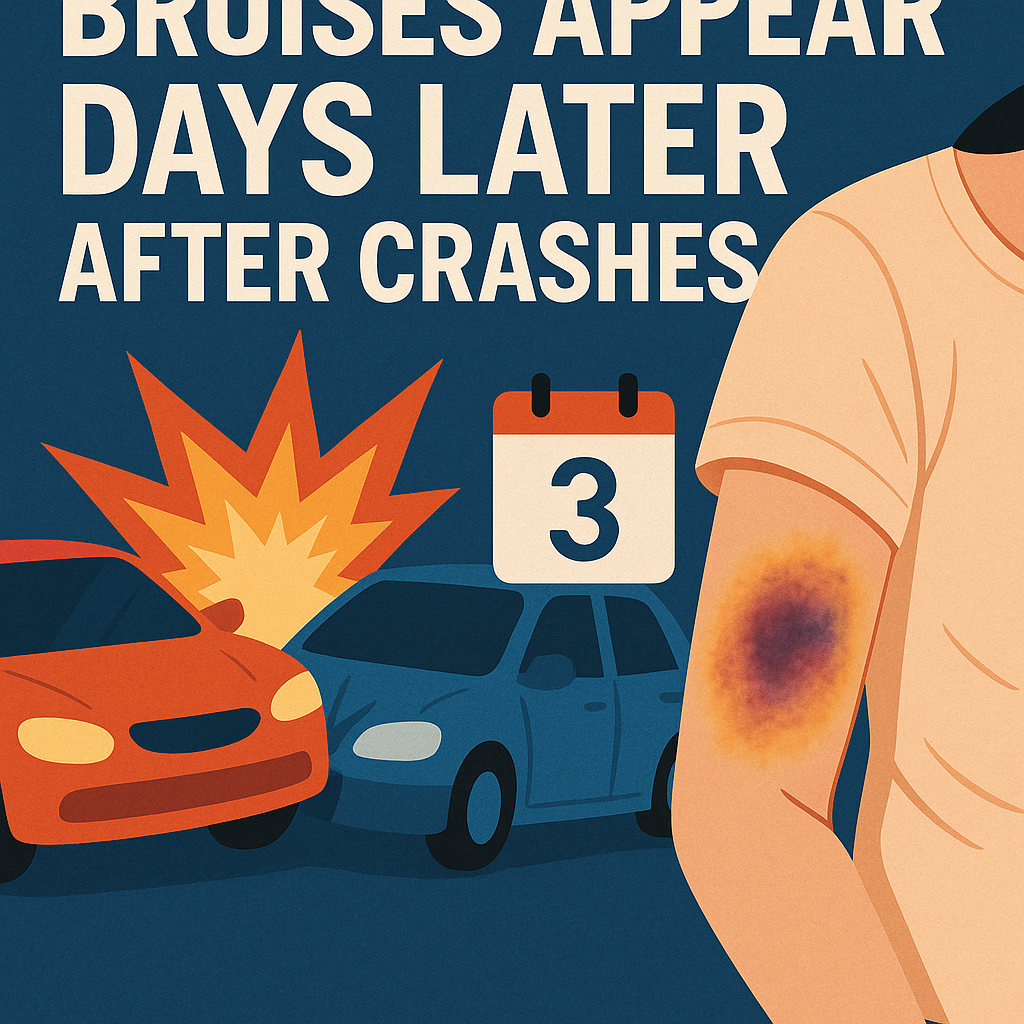
Why Bruises Appear Days Later After Crashes
When people experience a collision—especially a truck accident—one of the most surprising things they may notice is that bruises often don’t show up right away. Instead, dark purple or blue marks might appear hours or even days after the crash, catching many by surprise. This delayed appearance raises questions and concerns: Why do bruises surface days later? Is this normal after accidents? Understanding the reasons behind delayed bruising can help crash victims know what to expect and why monitoring their symptoms is important.
Why Symptoms Can Appear After Truck Accidents
Truck accidents can be particularly jarring, even for occupants who initially believe they walked away unscathed. The human body experiences a tremendous amount of force during these incidents. Even seemingly minor impacts can result in underlying tissue damage that takes time to become visible.
Initially, the body’s natural stress response—adrenaline—may mask pain or discomfort. Adrenaline acts as a “fight or flight” hormone, temporarily reducing pain sensitivity so individuals can react quickly. Once adrenaline subsides, more subtle symptoms, including bruising, stiffness, and discomfort, may emerge.
Bruises, in particular, form when small blood vessels known as capillaries are damaged due to impact. Blood seeps into the surrounding tissues under the skin. However, it often takes time for this blood to move toward the skin’s surface, creating the colorful marks most people associate with bruising. The body’s swelling response may further delay and hide these marks until a few days have passed.
In accidents involving trucks, the intensity and area of impact can be significant, and multiple parts of the body may be affected—sometimes without any immediate, visible sign. The body’s reaction to these forces marks the beginning of a process that only becomes noticeably colored and tender over time.
Common Symptom Patterns After Accidents
Everyone experiences trauma and injury differently, but certain patterns are common after a crash. Many crash victims report initially feeling only mild discomfort or stiffness, with more obvious symptoms presenting later on. Some key patterns include:
– Delayed Onset Bruising: Bruises may not be visible until 24–72 hours after the accident. They often start as faint discoloration or swelling, later darkening in color.
– Spreading Color: Bruising may spread as leaked blood disperses under the skin. It is common to see changes from reddish tones to darker blues or purples, then to greenish or yellowish hues as healing progresses.
– Location Surprises: Sometimes, a bruise appears a short distance from where the original blow was felt. Gravity and the nature of soft tissue can cause blood to pool away from the exact impact site.
– Stiffness and Swelling: Affected areas can gradually become more tender, swollen, or stiff as the body initiates an inflammatory response.
– Range of Pain: Pain and tenderness can increase before improving, corresponding with the visibility of bruising.
These patterns can unfold unpredictably and may differ from person to person depending on factors such as age, skin tone, underlying health, and the injury’s severity.
Why Symptoms Can Change Over Time
The evolution of symptoms following a crash—especially when it comes to bruises—relates to the intricate processes of the body’s healing and adaptation. When tissues are injured, the body starts a cascade of events to contain the damage and start repairs.
At first, local inflammation increases blood flow and immune response to the site. As blood leaks from broken capillaries, it gradually seeps through the tissue until it finds its way closer to the skin’s surface, where color changes become visible. At the same time, your body is busy breaking down and reabsorbing the leaked blood, causing color to shift as the hemoglobin (the component carrying oxygen in blood) degrades. That’s why bruises change from blue or purple to green, yellow, or brown over several days.
Additionally, other symptoms might begin or intensify over time as the initial shock wears off, muscles tense up, or swelling increases. People sometimes notice new or changing symptoms as the body tries to heal and regain balance, which is why keeping track of progression is helpful after a crash.
When People Typically Start Monitoring Symptoms
It’s common for individuals to begin paying closer attention to their bodies in the hours and days following a crash, particularly once the urgency of the incident has passed and the adrenaline effect dissipates. Many people report noticing new bruises, soreness, or stiffness the morning after the incident, or even two or three days later.
Often, the delayed appearance of symptoms prompts individuals to reevaluate how seriously they were affected. This period may involve checking for new marks on the skin, evaluating changes in how their body feels during typical movements, or simply noticing an increase in discomfort when sitting or lying still.
Monitoring is generally most important during the first few days after an accident, as this is when symptoms are likely to emerge or evolve. Keeping note of changes—such as new bruises, increased swelling, or altered mobility—can be valuable for personal awareness and for describing events if further medical or legal follow-up becomes necessary.
Conclusion
The fact that bruises appear days later after a crash is a normal and well-understood phenomenon, reflecting the body’s complex injury and healing processes. For people involved in truck accidents, it’s helpful to know that delayed bruising is common and that the appearance and progression of symptoms can offer important information about the body’s response to trauma. While every case is unique, staying aware of changes can empower crash victims as they move forward. By understanding these natural processes, individuals are better prepared for what to expect as their bodies recover from the impact.