
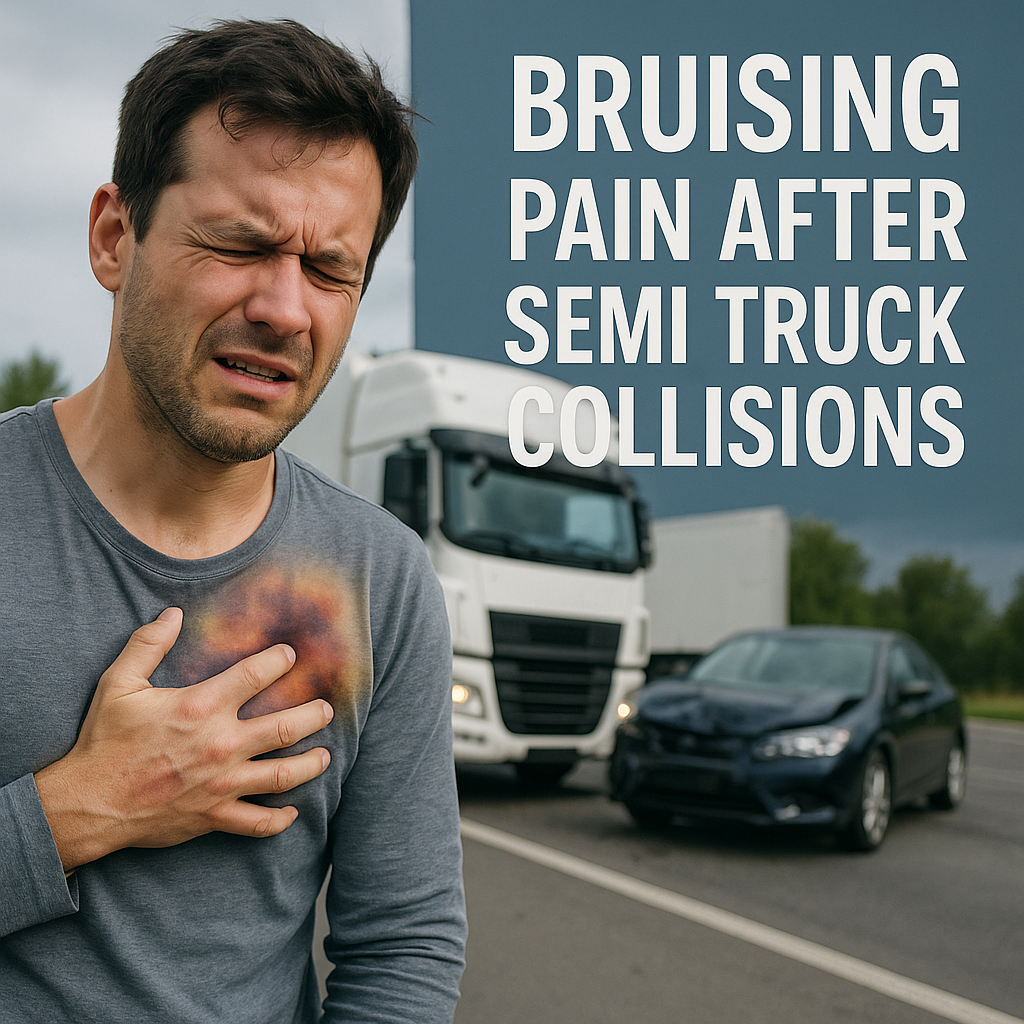
Bruising Pain After Semi Truck Collisions
When a semi truck is involved in a collision, the sheer force and momentum can lead to a wide range of physical effects on the people involved. One of the most common after-effects is bruising pain—a symptom that can manifest in various ways and at differing times, depending on the nature of the accident and other contributing factors. Understanding the nuances behind bruising pain after a semi truck collision can help individuals recognize the importance of monitoring their symptoms and taking appropriate steps to ensure their well-being.
Why Symptoms Can Appear After Truck Accidents
When two vehicles of vastly different sizes collide, the bodies of those involved are typically subjected to intense physical forces. In semi truck collisions, this may include sudden stops, forceful impacts, or even being struck by debris within the vehicle. The muscles, blood vessels, and soft tissue in the body absorb this energy, often leading to bruising and pain.
Bruising occurs when small blood vessels beneath the skin rupture due to trauma, allowing blood to seep into surrounding tissue. In a semi truck collision, the size and weight of the vehicle can compound the impact, generating enough force to cause deep tissue bruising even if there are no visible cuts or wounds. The pain associated with bruises is usually the result of both the initial injury and the body’s inflammatory response as it begins to heal.
There are also psychological and physiological reasons why bruising pain may be more noticeable after a truck accident. The shock and adrenaline surge during a crash can temporarily mask pain. As those effects subside, individuals might become more aware of injuries they did not notice in the immediate aftermath.
Common Symptom Patterns (No Medical Instructions)
After a semi truck collision, individuals frequently report a collection of symptoms associated with bruising pain. While each person’s experience is unique, some patterns are more frequently observed:
– Localized Soreness: This may present as tender, aching spots around the areas most affected by the collision or by seat belt restraints.
– Visible Discoloration: Classic black-and-blue marks may develop. Over time, these can shift to green, yellow, or brown as the body reabsorbs the blood.
– Swelling: Fluid and blood can collect at the site of impact, leading to puffiness or swelling that accompanies pain.
– Stiffness and Limited Movement: Muscle bruising, in particular, can restrict range of motion and cause morning stiffness or aches during movement.
– Delayed Discomfort: Some people notice that certain areas become more painful one or two days after the collision, rather than immediately.
– Sensitivity to Touch: Bruised areas may feel more tender or sore, especially with pressure from clothing or while moving.
The severity and location of bruising pain after a semi truck collision can vary widely, depending on factors such as seat belt usage, airbag deployment, point of impact, and personal health background.
Why Symptoms Can Change Over Time
Bruising pain is rarely static. The body’s response to injury unfolds in several phases, each one shaped by natural repair processes.
Initially, many people experience numbness or minimal discomfort, which can quickly develop into more pronounced pain as adrenaline fades and the inflammation process begins. Bruises may not appear immediately—they often become visible in the hours or days following the collision as pooled blood migrates closer to the skin’s surface. As days go by, bruised areas may evolve in color and sensation, sometimes becoming itchier as healing progresses.
Moreover, other symptoms might emerge as the body adjusts. Swelling can increase or decrease, and stiffness may ebb and flow, particularly after periods of rest or disuse. The overall experience of bruising pain after a semi truck collision can therefore change day by day, reflecting the body’s ongoing efforts to heal itself.
When People Typically Start Monitoring Symptoms
After a semi truck collision, many people experience a surge of stress and adrenaline, which can temporarily dampen pain signals and create a sense of urgency focused more on immediate concerns—such as checking for obvious injuries, talking with first responders, or dealing with the logistics at the accident scene.
It’s common for individuals not to fully register bruising pain or other subtle symptoms until hours or even days after the crash. In some cases, it’s only as the body begins to calm down from the initial shock that soreness, swelling, or discoloration is noticed. The realization to start actively monitoring symptoms may be prompted by:
– Visible Changes: Noticing new bruises, swelling, or changes in skin color during personal hygiene routines.
– Worsening Sensations: Experiencing increased soreness, stiffness, or restricted movement, especially after waking up or being still for extended periods.
– Advice from Others: Suggestions from friends, family members, legal advisors, or insurance representatives to keep track of developing symptoms for documentation and record-keeping.
– Ongoing Discomfort: Continuing pain or tenderness that doesn’t resolve quickly often leads individuals to pay closer attention to their bodies post-collision.
The process of monitoring bruising pain and other symptoms after a semi truck collision varies greatly from person to person. Some may begin a mental inventory of symptoms almost immediately, while others may only become aware as new or worsening sensations develop.
Neutral Closing Paragraph
Every semi truck collision is unique, and so are the ways individuals experience and perceive bruising pain in the aftermath. Recognizing symptom patterns, timing, and factors that influence how pain emerges and evolves can be valuable in understanding the events following such a traumatic incident. By being aware of changes in one’s body and knowing when to observe symptoms, people are better positioned to advocate for their overall health and well-being as they navigate the days and weeks after a collision.