
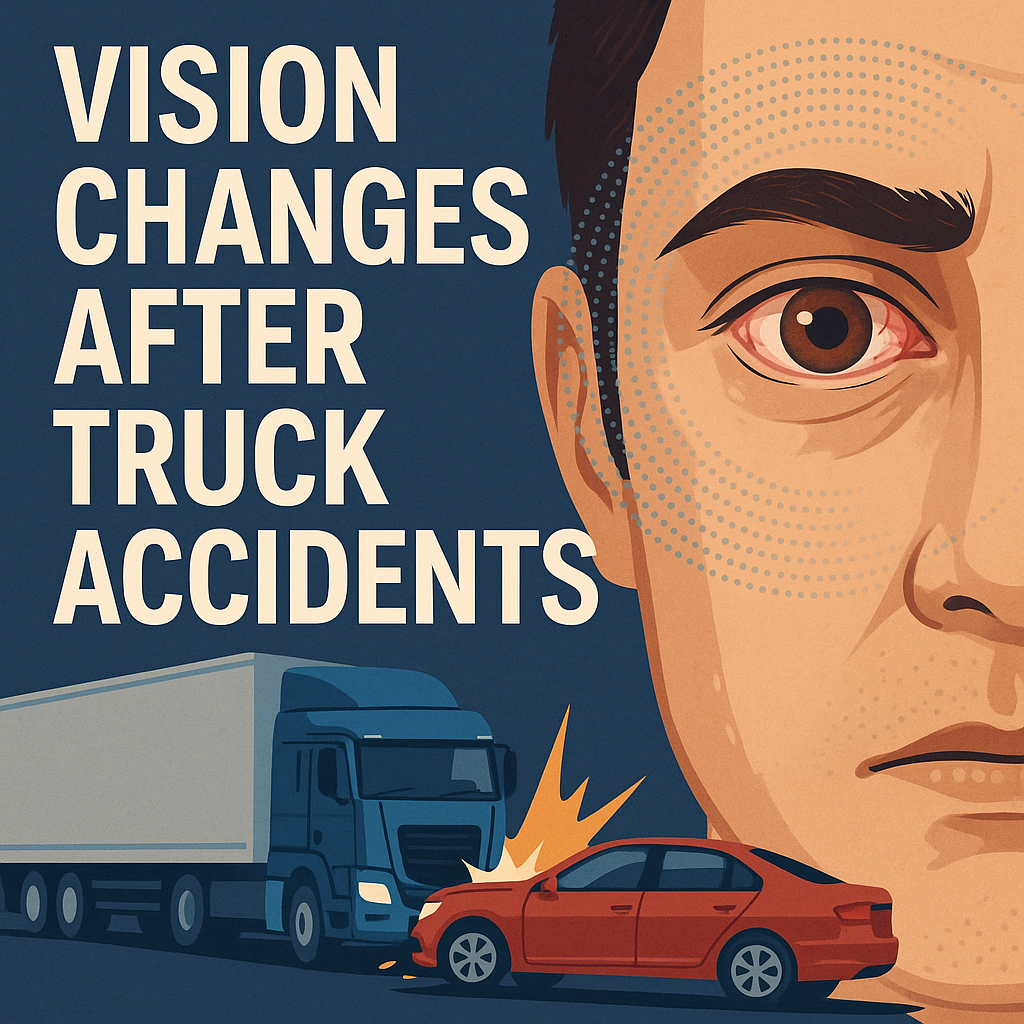
Vision Changes After Truck Accidents
Vision is one of our most important senses, playing a vital role in daily activities, work, and overall quality of life. After a truck accident, some individuals may notice changes in their vision. These changes can be temporary or persist for a longer period, and they can affect anyone, regardless of age or general health. Understanding how and why vision changes might occur after a truck accident can help individuals monitor their well-being and seek appropriate evaluations when necessary. This article explores the educational aspects of “vision changes truck accident,” delving into symptom patterns, timing, and the importance of monitoring.
—
Why Symptoms Can Appear After Truck Accidents
Truck accidents are often high-impact events due to the size and weight of commercial vehicles. This means that the force involved can be significant, even in collisions that might seem minor. Vision changes after a truck accident can have several potential causes, all linked to the effects of such impacts.
Physical Impact: During an accident, the body experiences sudden deceleration or acceleration. If the head or face strikes an object, even with minor force, it can affect the eyes or areas of the brain responsible for processing visual information. Airbags, seatbelts, or simply the inertia of a moving vehicle can contribute to these forces.
Indirect Forces: Not all vision changes are caused by direct injury. Sometimes, the force of the collision can cause the brain to move within the skull, a phenomenon associated with concussive injuries. The delicate structures involved in vision, including nerves and blood vessels, can be affected by this movement.
Emotional and Physiological Stress: Truck accidents are stressful events. Elevated adrenaline and stress responses have a complex impact on the body, sometimes leading to symptoms such as blurred vision or difficulty focusing, even in the absence of direct injury.
Understanding these potential causes is important, as it highlights why vision changes after a truck accident are not uncommon and can have multiple underlying factors.
—
Common Symptom Patterns (No Medical Instructions)
Vision changes after a truck accident can present in various ways. Being aware of different patterns can help individuals recognize when something feels different or unusual. Some of the most frequently reported patterns include:
1. Blurred Vision: Individuals may notice that their vision is not as sharp as before, making it difficult to read signs, screens, or details close up or at a distance.
2. Double Vision (Diplopia): Seeing two images of a single object can be disorienting and may occur intermittently or constantly.
3. Light Sensitivity: Ordinary lights may suddenly feel too bright, causing discomfort or pain.
4. Flashes or Floaters: Some people describe seeing flashes of light, spots, or floaters that were not present prior to the accident.
5. Difficulty Focusing: It may become challenging to quickly shift focus between objects at different distances, or to keep lines or text in focus.
6. Loss of Peripheral Vision: In some cases, the edges of the visual field seem dim or dark, making it harder to see things “out of the corner of the eye.”
7. Eye Fatigue or Headache: Visual tasks like reading, watching TV, or using digital devices may cause eye strain or headaches, potentially as a secondary response to other vision changes.
It is important to remember that the appearance of any of these symptoms does not reveal their underlying cause or severity. The patterns mentioned above can be related to a broad range of factors after a truck accident, and the presence of symptoms may vary from person to person.
—
Why Symptoms Can Change Over Time
Vision changes after a truck accident are not always constant. In many cases, symptoms can appear immediately after the incident, while in others, they may develop gradually over hours, days, or even weeks.
Delayed Onset: Stress hormones like adrenaline can initially mask symptoms. As the body returns to a restful state, new changes may become noticeable.
Evolving Symptoms: The body is engaged in a complex healing and adjustment process after an accident. Swelling, inflammation, or other physiological reactions may cause vision symptoms to shift over time.
Temporary vs. Persistent: Some symptoms may fade as the body recovers, while others might persist. Monitoring changes—when they start, stop, or progress—can provide helpful information to share with healthcare professionals.
Influence of Activity: Increased physical or cognitive activity (such as reading, driving, or using a computer) can sometimes make vision changes more noticeable. As routines return to normal, symptoms that were not apparent in the immediate aftermath may become clearer.
Understanding this variability is important, as it emphasizes the need for ongoing attention to vision changes after truck accidents, rather than dismissing minor or delayed symptoms.
—
When People Typically Start Monitoring Symptoms
After a truck accident, immediate concerns often revolve around safety, physical injuries, and the logistics of the incident. It is common for individuals to focus on obvious injuries, such as cuts or bruises, while more subtle symptoms like vision changes may be overlooked initially.
Within the First Hours: Some people notice vision changes just after the accident. This may be during the drive home, when checking paperwork, or when communicating with emergency personnel.
First 24–48 Hours: As adrenaline wears off, more subtle symptoms can surface. If vision changes are present, this is often when individuals become aware and start observing patterns.
Days to Weeks Later: Sometimes, people attribute early symptoms to stress, lack of sleep, or emotional responses. Only as symptoms persist or interfere with daily activities do individuals begin to consciously monitor them.
Prompted by Daily Activities: Difficulties performing tasks like reading, using electronic devices, or driving can highlight vision changes that were not initially apparent. It is common for individuals to start tracking symptoms when these activities become unusually challenging.
Monitoring symptoms involves paying attention to frequency, triggers, and changes rather than self-diagnosing or self-treating. Keeping a simple log of when symptoms occur, their intensity, or any patterns can be informative for future discussions with eye care or medical professionals.
—
Neutral Closing Paragraph
Vision changes after a truck accident can affect people in various ways and may take time to become noticeable. By understanding the possible reasons for these symptoms, the diverse ways they can appear, and the importance of monitoring, individuals are better equipped to recognize shifts in their well-being. Remaining attentive to changes and informed about symptom patterns helps ensure that visual health receives the attention it deserves, contributing to overall recovery and peace of mind after a truck accident.