
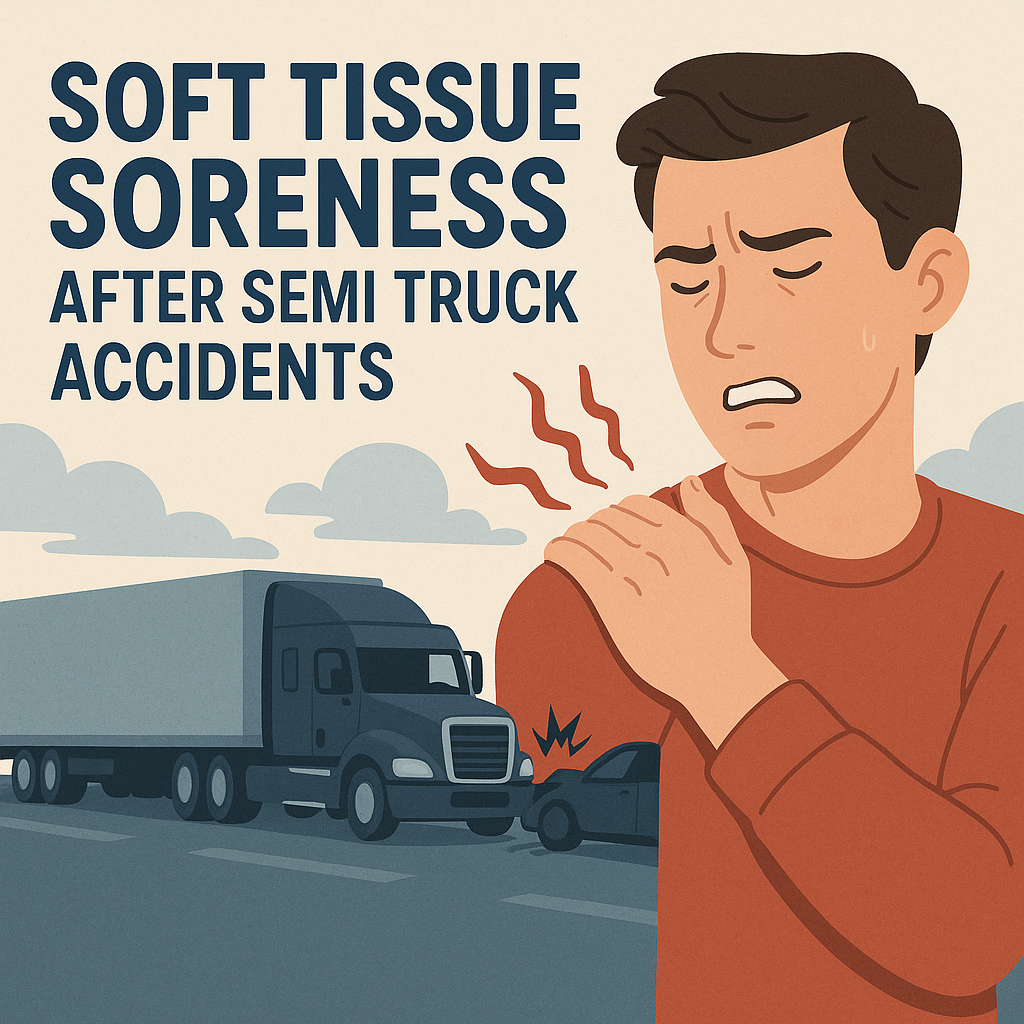
Soft Tissue Soreness After Semi Truck Accidents
Accidents involving semi trucks can be deeply unsettling experiences, often leaving individuals with not only emotional distress but also a range of physical symptoms. Among these, soft tissue soreness is one of the most commonly reported complaints. Unlike cuts or fractures, soft tissue soreness can develop subtly, often going unnoticed in the immediate aftermath of the incident. Exploring why these symptoms occur, their common patterns, and how they may change over time can help individuals better understand what to expect after a truck accident.
—
Why Symptoms Can Appear After Truck Accidents
Semi truck accidents usually involve high-impact collisions due to the size and weight of these large commercial vehicles. The sheer force involved in such incidents can place significant strain on the muscles, ligaments, and tendons—collectively known as soft tissues. These soft tissues function as the body’s stabilizers and shock absorbers during sudden movements.
Direct trauma, rapid deceleration, and abrupt changes in direction that frequently occur in truck crashes can create a range of stresses on the body:
– Hyperextension or hyperflexion: Quick back-and-forth movements can stretch soft tissues beyond their normal range.
– Compression: The body may be thrust against hard surfaces, squeezing or compressing muscles and ligaments.
– Shearing forces: Sliding between body parts or surfaces can disrupt the microscopic fibers within the muscle or connective tissue.
Interestingly, the body’s natural response to stress or trauma often includes a surge of adrenaline and endorphins. These chemicals can temporarily mask discomfort or pain, meaning soreness may not be felt immediately following the incident. Instead, as adrenaline levels return to normal, sensations of aches or stiffness may begin to surface.
—
Common Symptom Patterns
Experiencing soft tissue soreness after a semi truck accident is not unusual, and certain patterns are frequently observed. Common locations affected include the neck, shoulders, lower back, and sometimes the limbs. While the specific experience can vary widely, some of the general symptom patterns that people may notice include:
– Aches and stiffness: These sensations may develop gradually over several hours or days, particularly in regions most exposed to jarring movements.
– Tenderness to touch: Pressing on affected areas may elicit heightened sensitivity or discomfort.
– General fatigue or heaviness: The affected muscles can feel tired or weak, which is sometimes mistaken for overall post-accident fatigue.
– Temporary swelling or mild bruising: Soft tissues may respond to stress with minor swelling or discoloration, depending on the force of the impact.
Such symptoms often manifest in the days following a truck accident and can be influenced by factors like the individual’s physical condition, the type of collision, and even their seating position at the time of impact. Importantly, the pattern and severity of symptoms can be different from person to person.
—
Why Symptoms Can Change Over Time
Soft tissue soreness is rarely static; instead, its intensity and nature can change as days progress. Some key reasons behind these changing patterns include:
– Inflammatory response: After trauma, the body initiates an inflammatory response to begin the repair process. As swelling develops or resolves, soreness may fluctuate.
– Delayed onset muscle soreness: Sometimes, discomfort does not appear immediately but intensifies over 24 to 72 hours after the accident—a phenomenon known as “delayed onset soreness.”
– Adaptive behaviors: People may unconsciously adjust how they move or carry themselves to avoid discomfort. These compensatory movements can shift soreness to new areas or lead to different muscles becoming strained.
– Activity level: Resting may initially alleviate some soreness, but returning to regular activities too quickly can exacerbate or prolong symptoms. Conversely, too little movement can sometimes cause stiffness to worsen.
Monitoring these changes can help individuals better understand their own recovery process and set appropriate expectations for how symptoms may evolve in the days and weeks after the incident.
—
When People Typically Start Monitoring Symptoms
In the immediate hours after a semi truck accident, many individuals are preoccupied with the emotional shock, legal procedures, and, in some cases, communicating with emergency response teams or insurance representatives. Since the body’s natural stress responses can temporarily suppress discomfort, it is common for people to only begin noticing soft tissue soreness several hours or even days after the accident.
Awareness of potential symptoms generally increases once the immediate aftermath has passed. Many individuals start monitoring for changes in their physical condition after the initial panic subsides and they have a chance to reflect on the incident. It is during this time—often in the first 24 to 72 hours—that people become more attuned to:
– Increased stiffness in key areas like the neck, shoulders, or back.
– Discomfort performing everyday movements such as turning the head, sitting, or walking.
– Unexpected soreness after a night’s sleep or during periods of rest.
As individuals recognize and acknowledge these symptoms, they may begin to keep mental or written notes regarding their progression, helping them better communicate their experiences if questioned by insurance representatives or medical professionals.
—
Conclusion
Soft tissue soreness following a semi truck accident is a common concern, often complicated by delayed onset and evolving symptom patterns. Understanding why symptoms might appear, what common patterns exist, and how soreness can change over time provides valuable insight for anyone navigating the aftermath of such a challenging event. Recognizing and monitoring these sensations is an important step in being informed and proactive about one’s well-being after an accident, and it can make a meaningful difference in effectively addressing any concerns that may arise during recovery.