
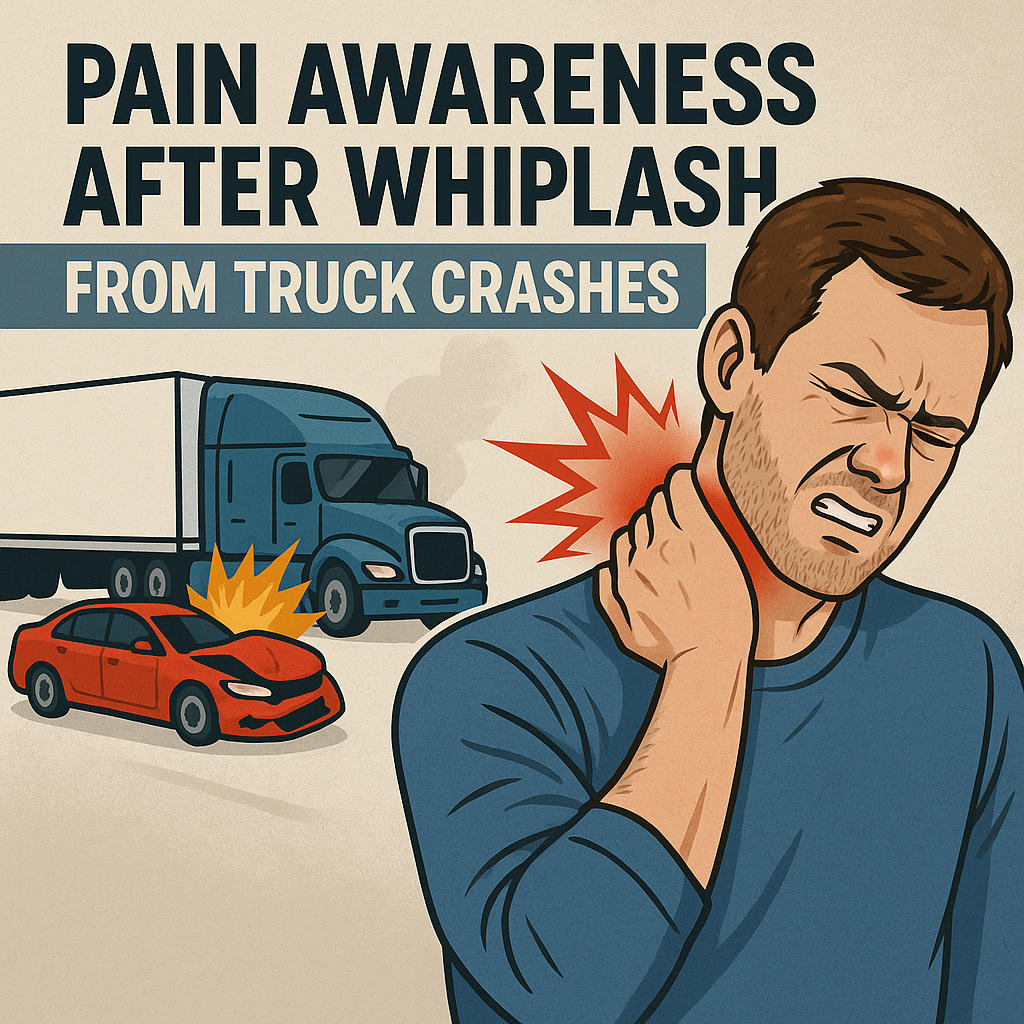
Pain Awareness After Whiplash From Truck Crashes
Truck accidents are known for their severity and the range of physical effects they can cause. Among these, whiplash is a frequent outcome, often leading to both immediate and delayed pain symptoms. Developing a strong understanding of whiplash pain awareness after a truck crash can be especially helpful for individuals navigating their post-accident experience. This article explores why symptoms may arise, how they present themselves, why they can change as time goes on, and how individuals typically become attentive to their symptoms.
—
Why Symptoms Can Appear After Truck Accidents
The force involved in a truck crash is significantly greater than that in collisions with smaller vehicles. This higher level of force can result in rapid, violent movements of the head and neck—what is commonly referred to as “whiplash.” The term describes a mechanism of injury rather than a specific diagnosis, and it involves the neck being forced backward and then forward in a short period of time.
The unique nature of a truck crash, with its combination of mass, speed, and sudden deceleration, can mean that the body undergoes a rapid transfer of energy. The muscles and ligaments in the neck are especially vulnerable because they are tasked with supporting the head during these abrupt motions. After such an incident, a variety of symptoms can begin to emerge—sometimes immediately, other times with a delay—depending on many factors like the speed of impact, position in the vehicle, and the way the head and neck were moved.
Additionally, adrenaline and the body’s natural stress responses may initially mask sensations such as pain or stiffness. It is not uncommon for people involved in truck accidents to feel fine in the minutes or even hours that follow, only to begin noticing symptoms long after the event.
—
Common Symptom Patterns (No Medical Instructions)
For many individuals, whiplash is associated with several common physical sensations. These might include neck discomfort, headaches, and a feeling of reduced range of motion. Sometimes, people report a general tenderness or aching around the neck and shoulders. Others might experience symptoms that seem unrelated at first, such as fatigue or difficulties concentrating.
It’s important to recognize that every person’s experience can differ. Symptom patterns may vary in intensity, frequency, and duration. Some individuals become aware of stiffness when turning their head, while others might feel discomfort while resting or sleeping. Occasionally, there may be a sense of numbness or tingling in the arm or hand, but the overall pattern tends to involve discomfort that is localized to the neck, head, upper back, or shoulders.
Because the spine and nervous system play a central role in these sensations, individuals involved in truck crashes may notice that their symptom patterns can shift or evolve over time. The degree and quality of discomfort can be influenced by everyday activities, the body’s stress response, and even psychological factors such as anxiety or stress related to the crash.
—
Why Symptoms Can Change Over Time
Understanding why symptoms change after a whiplash injury can help individuals remain attentive to their body’s signals. In the hours and days following a truck crash, the initial pain or stiffness caused by tissue strain may actually worsen before it improves. This can be attributed to natural inflammatory processes in the body, which often take time to develop after an injury.
As days progress, people might notice new sensations or a redistribution of discomfort. Sometimes, the location or nature of pain shifts, or it might start to improve in one area and become more noticeable in another. Such changes can be linked to the way the body heals, the development of compensatory movement patterns, and the gradual re-engagement in daily activities.
In some cases, additional factors such as sleep quality, emotional well-being, and physical activity level can influence how symptoms change over time. For example, difficulty sleeping after a collision may contribute to feelings of fatigue or heightened awareness of pain. At times, activities that place strain on the neck or shoulders may create a temporary increase in discomfort.
These fluctuations are not uncommon, especially in the context of injuries sustained during truck crashes, where impact forces and psychological factors can be significant.
—
When People Typically Start Monitoring Symptoms
Following a truck accident, people often initially focus on shock, logistics, and immediate safety concerns. Pain awareness frequently becomes a priority once adrenaline subsides and daily routines resume. Some individuals may begin monitoring their symptoms within a few hours of the incident, while others might not pay close attention until the next day or later, when symptoms become more pronounced or interfere with regular activities.
Monitoring can take the form of personal observation, informal self-checks throughout the day, or discussions with family and friends. People may notice patterns in pain intensity, what makes symptoms more noticeable, or times of day when discomfort peaks. Such awareness often increases if symptoms persist or begin to interfere with work, sleep, or social activities.
Workplace policies, insurance guidelines, or advice from professionals may also prompt individuals to keep records regarding whiplash pain awareness truck crash symptoms. In some cases, individuals start tracking details like the onset of discomfort, stiff movements, or changes that occur over a period of days or weeks.
Paying conscious attention to these patterns can help individuals understand their experience more fully and make informed decisions about daily activities and personal well-being.
—
Neutral Closing Paragraph
Pain awareness after whiplash from a truck crash is a complex and often evolving process. Understanding why symptoms can arise, how they commonly present, and why they might shift over time can promote better self-awareness during the post-accident recovery phase. By paying attention to bodily signals and patterns, individuals can remain attentive to changes that may affect daily life while navigating the aftermath of a truck accident. While this educational overview provides insights into whiplash pain awareness, anyone involved in a collision may benefit from ongoing observation and a thoughtful approach to personal well-being.