
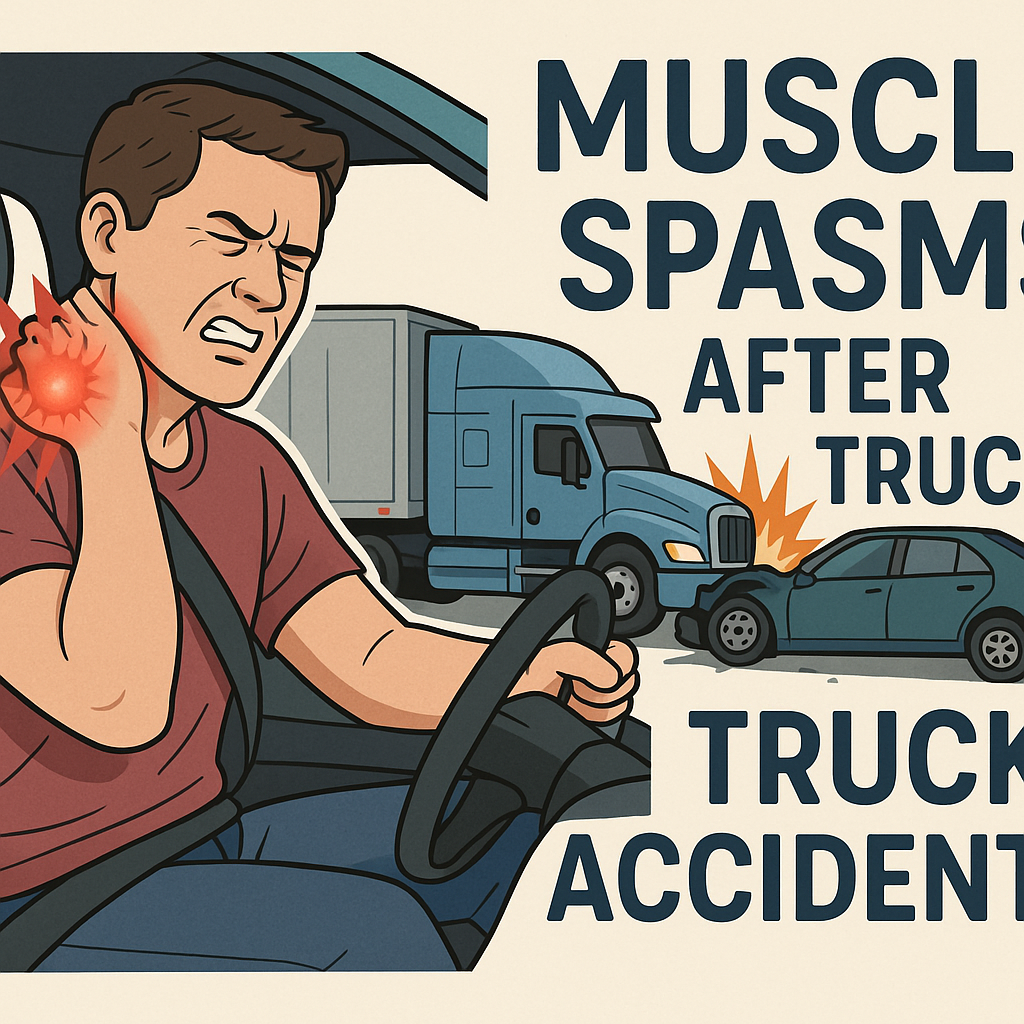
Muscle Spasms After Truck Accidents
Truck accidents can be highly traumatic events, producing not only immediate injuries but also a host of physical symptoms that might develop over time. Among these, muscle spasms are a notable concern that many people experience in the days or weeks following a collision. Understanding why muscle spasms can occur after a truck accident, the ways symptoms may present, and the importance of monitoring physical responses is essential for anyone involved in such an incident.
Why Symptoms Can Appear After Truck Accidents
The human body is built for resilience, but the forces involved in a truck accident are often more than it is designed to withstand. Even without visible injuries, the body can experience deep tissue strain. A truck’s considerable mass and the force of impact often mean that muscles, ligaments, and nerves are subjected to sudden trauma.
Muscle spasms, also described as involuntary contractions or tightening of muscle tissue, can be the body’s protective reaction to injury. When the body detects possible damage, muscle fibers may tense or contract to protect underlying structures and prevent further harm. Sometimes, symptoms are not immediately obvious because the adrenaline and shock people feel during and immediately after an accident can temporarily mask discomfort.
The force of a truck accident can impact nearly any muscle group, depending on variables such as seat position, use of restraint systems, and the directions of collision forces. The back, neck, and shoulders are among the most susceptible regions, but muscle spasms can also be experienced elsewhere, depending on how the body moved during the crash.
Common Symptom Patterns
Everyone’s experience with muscle spasms after a truck accident will vary based on their unique circumstances. Some common patterns that people might notice include:
1. Delayed Onset
After a truck accident, muscle spasms may not be felt right away. It is common for them to begin hours or even days following the collision, as the initial shock wears off and the body starts to process what happened.
2. Localization and Spread
Muscle spasms are sometimes localized to areas that experienced direct force or strain, such as the neck in cases of whiplash-like movements, or the lower back after a jarring impact. In other cases, spasms can radiate to nearby muscle groups, affecting mobility or comfort more broadly.
3. Fluctuation
The intensity and frequency of muscle spasms can fluctuate. Stress, movement, or even changes in posture might trigger a spasm, while resting or using support can reduce it. Some people report that certain times of day, such as upon waking in the morning or after long periods of inactivity, lead to more frequent spasms.
4. Accompanying Sensations
Muscle spasms may be experienced as twitching, tightening, or pulsing beneath the skin. Some people notice associated sensations such as stiffness or minor discomfort in the affected area. Sensitivity to touch or movement can develop in the days that follow the accident.
Why Symptoms Can Change Over Time
Muscle spasms arising after a truck accident are dynamic and their presentation may evolve for several reasons:
Healing Stages
As inflammation and swelling in the tissues shift during the healing process, the areas of muscle involvement may change, leading to new or varying patterns of spasms.
Activity and Rest Cycles
Alterations in activity level post-accident can influence muscle behavior. Increased rest or immobilization may lead to stiffness and subsequent spasms, while gradual increases in activity might cause muscles to react as they adapt.
Psychological Factors
Stress and anxiety after a truck accident are common and can affect how the body holds tension, sometimes leading to more pronounced muscle spasms. The mind-body connection is strong, and emotional stress may amplify physical symptoms.
Secondary Effects
As people move differently to compensate for soreness or other injuries, they might develop new muscle tension in areas that were initially unaffected. This adaptation can create a changing pattern of symptoms over time.
When People Typically Start Monitoring Symptoms
It is common for individuals involved in a truck accident to begin noticing or monitoring symptoms after the initial shock has passed. This period varies but often occurs during the first 24 to 72 hours post-accident. In some cases, delayed symptoms can take several days or even weeks to materialize.
People may start paying closer attention to their bodies when they:
– Feel stiffness or soreness upon waking in the morning following the accident.
– Attempt regular activities and notice unexpected discomfort or spasms.
– Experience interruptions in sleep as a result of muscle twitching or tightening.
– Begin noticing patterns—such as spasms triggered by certain movements or activities.
This heightened awareness can prompt individuals to keep a record of their symptoms, noting frequency, location, and any potential triggers. Monitoring over time can help individuals track how symptoms evolve and determine if their physical responses are stabilizing or changing.
Neutral Closing Paragraph
Muscle spasms after a truck accident are a common occurrence and can be an important indicator of how the body is responding to physical stress. While the patterns and timelines of these symptoms vary widely from person to person, understanding their development can help individuals become more aware of their own recovery processes. By watching for changes and keeping track of their experiences, those involved in truck accidents can better navigate the complex aftermath of such events.