
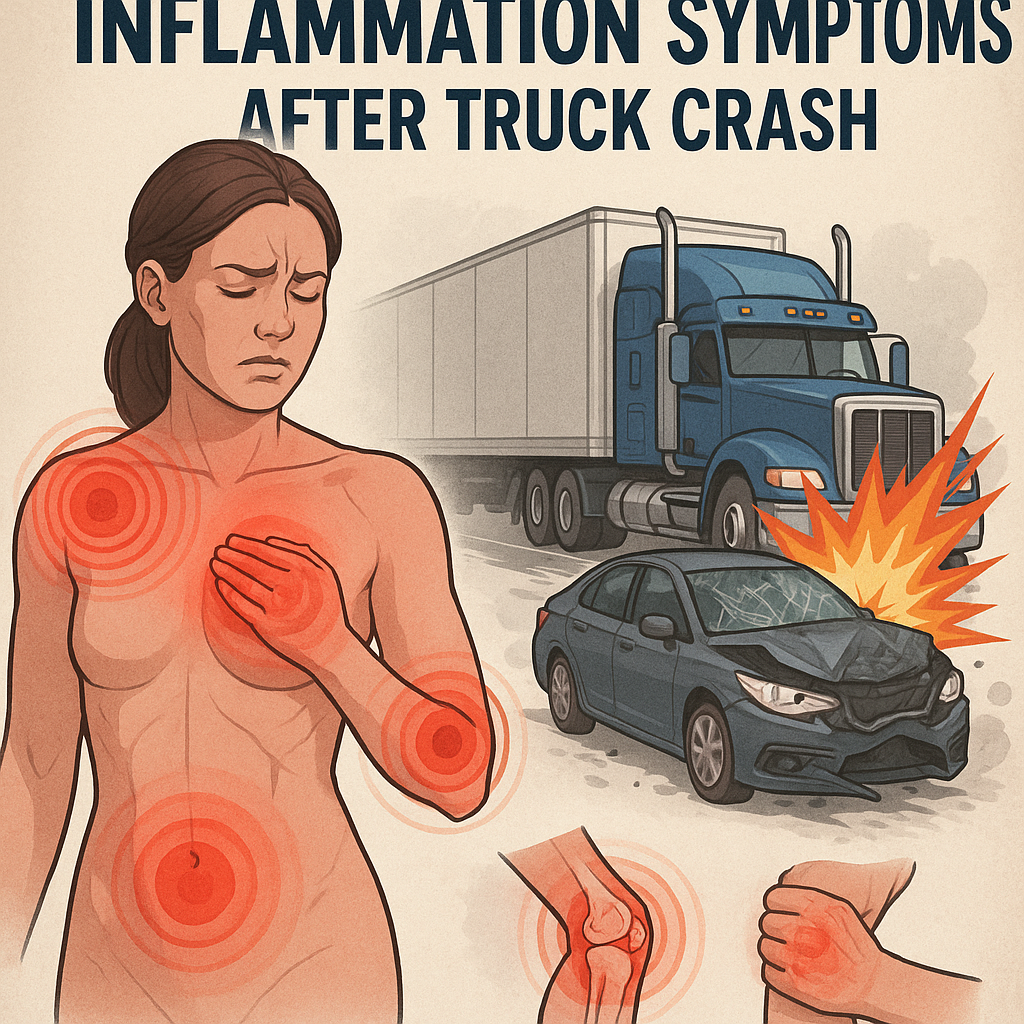
Inflammation Symptoms After Truck Crashes
Truck accidents, due to their sheer size and force, can subject the human body to significant stress. One response the body often exhibits after such traumatic events is inflammation. Understanding inflammation symptoms after a truck crash helps in recognizing potential signals from the body, even when injuries are not immediately obvious. This article explores why symptoms can arise following truck accidents, common patterns of inflammation symptoms, why these symptoms may change over time, when people typically begin monitoring their condition, and important considerations in the aftermath.
Why Symptoms Can Appear After Truck Accidents
Inflammation is a natural response of the body to injury or stress. When the body experiences a significant event, such as a truck crash, tissues may endure direct impact, stretching, or compressive forces. Even without visible injuries, the internal tissues, muscles, and joints can sustain microtrauma. This can prompt the immune system to react by sending increased blood flow and immune cells to the affected areas, leading to inflammation.
The body’s response does not always coincide with dramatic injuries. Truck crashes, because of their high energy, can cause subtle tissue strains or bruises that might not be noticeable right away. As the body attempts to repair itself, various symptoms associated with inflammation may become evident, often delayed by hours or even days after the event. The physical and emotional stress involved in a crash may also play a role by amplifying the body’s response.
Common Symptom Patterns (No Medical Instructions)
Individuals experiencing inflammation symptoms after a truck crash may notice a diverse range of patterns. These can vary depending on the parts of the body impacted, the severity of the crash, and personal health factors. Some typical inflammation symptoms after a truck crash might include:
– Swelling: Areas that have absorbed impact may show visible puffiness as fluids accumulate.
– Stiffness: Joints and muscles can become rigid, making movement less fluid than usual.
– Redness and Warmth: Affected spots may exhibit color changes and feel warmer to the touch, reflecting increased blood flow.
– Tenderness: Touching specific regions may produce discomfort, even if bruising isn’t visible.
– General Soreness: Widespread aches or a sense of heaviness in certain areas may develop after a crash.
– Fatigue: Some people feel generally tired or depleted as the body activates its repair systems.
It is important to note that not all symptoms appear immediately, and some may be subtle. Additionally, psychological stress, which often accompanies the aftermath of a collision, may magnify the perception of physical symptoms, shaping how inflammation is experienced.
Why Symptoms Can Change Over Time
The body’s inflammatory response is not a uniform process. Initially, symptoms may be mild or even unnoticed amidst the adrenaline rush of a crash. As time passes and the body shifts from a state of alertness to recovery, inflammation may become more pronounced.
There are several reasons why inflammation symptoms after a truck crash can change:
– Delayed Onset: Adrenaline and stress hormones temporarily mask discomfort; symptoms may emerge hours or days later.
– Progression of Healing: Inflammatory symptoms may peak and then subside as the body repairs itself.
– Compensatory Strain: Sometimes, favoring one part of the body leads to overuse or stress elsewhere, causing new or changing symptoms.
– Secondary Effects: Lying dormant for long periods, changes in daily activity, or even returning to routine tasks can reveal hidden inflammation.
These dynamic patterns highlight the importance of ongoing observation for new or shifting symptoms after experiencing a truck crash.
When People Typically Start Monitoring Symptoms
After a traumatic event such as a truck crash, many people begin paying attention to their bodies once the initial shock subsides. For some, symptoms are monitored right away, especially when pain or swelling is obvious. For others, vigilance increases over hours or days as discomfort develops or intensifies.
It’s common for individuals to notice inflammation symptoms truck crash survivors might experience while dealing with daily activities—examples include difficulty turning the neck, stiffness when rising from bed, or soreness after light exertion. These developments often prompt closer monitoring and, for some, lead to discussions with a healthcare provider.
Lifestyle, job demands, and personal health awareness also influence when and how symptoms are tracked. Professional drivers, for example, might be especially vigilant about changes that could impact their ability to work safely.
Regardless of timing, being attuned to emerging inflammation symptoms after a truck crash is key to understanding how the body is responding and aids in making informed decisions about personal well-being.
Neutral Closing Paragraph
Truck crashes can be overwhelming, and the body’s response to such an event often includes various inflammation symptoms. These may arise immediately or develop gradually and can change as recovery progresses. Continual self-observation and awareness of typical symptom patterns is important for anyone involved in a truck crash. While this information offers general insight into the body’s process, every situation is unique, and personal monitoring helps individuals take an informed approach to their health following a significant event.