
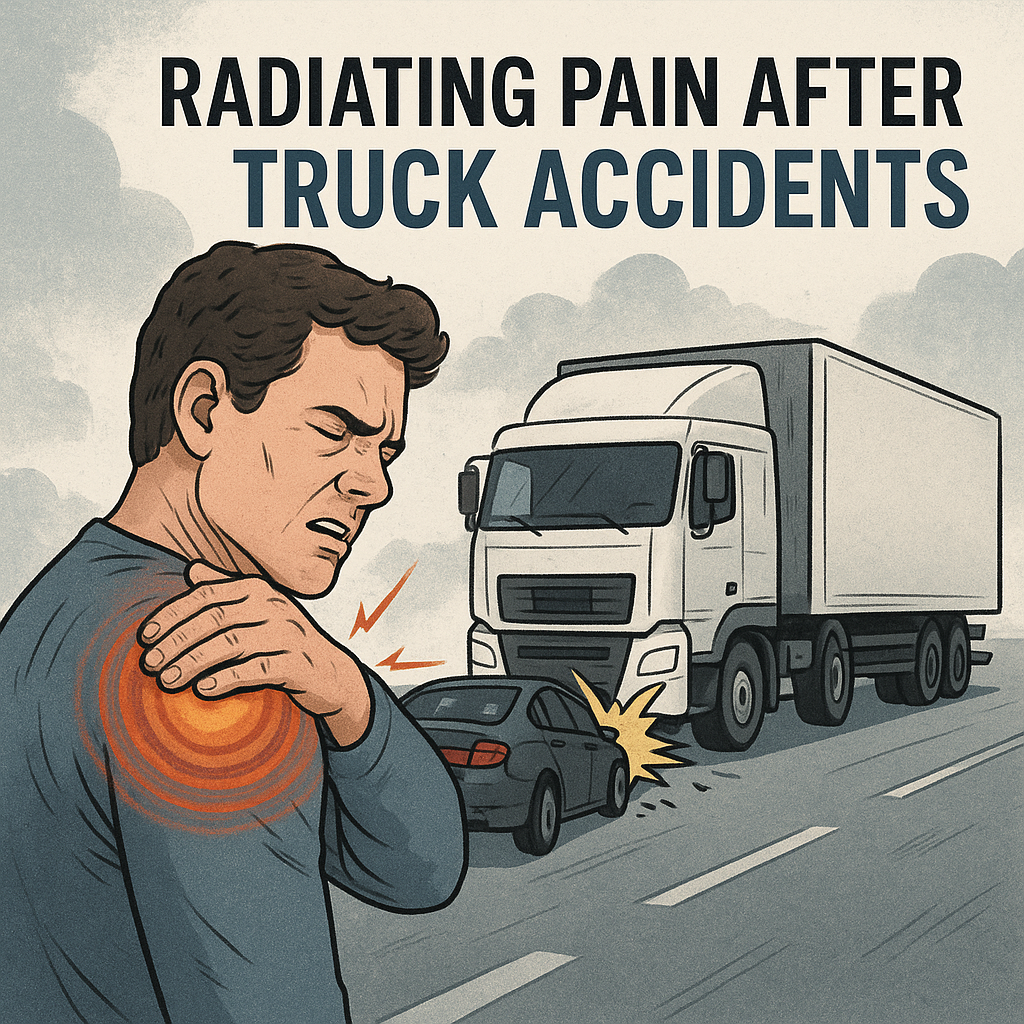
Radiating Pain After Truck Accidents
Truck accidents can have far-reaching consequences, not just for vehicles and property, but for the people involved as well. One symptom that sometimes emerges after these incidents is radiating pain—an uncomfortable experience where pain spreads from one area to another, often following the path of nerves. Understanding the nature of radiating pain after a truck accident can be crucial for those affected, allowing them to better communicate with their healthcare providers and track any new symptoms.
Why Symptoms Can Appear After Truck Accidents
The human body is not designed to withstand the significant forces that occur during truck collisions. Even at relatively low speeds, the impact from a large vehicle can result in sudden, forceful movements of the neck, back, and limbs. These movements can sometimes stress or compress nerves and other soft tissues in the body.
Unlike cuts or visible injuries, nerve-related symptoms may not manifest immediately. The adrenaline released during a traumatic event can mask discomfort for hours or even days. It’s also not uncommon for the body’s initial focus to be on more obvious injuries, causing subtle symptoms to be overlooked at first.
Truck accidents also often involve unique forces due to the size and weight of the vehicles involved. Sudden stops, twists, and direct impacts can all stress the musculoskeletal system. This can result in a chain reaction where one area of the body compensates for another, potentially leading to radiating sensations over time.
Common Symptom Patterns
Radiating pain refers to discomfort that moves outward from a central location. Unlike localized pain, which stays in one spot, radiating pain often travels along nerves or specific pathways in the body. Here are some typical patterns that individuals might notice after being involved in a truck accident:
– Neck and Shoulders: Individuals sometimes experience pain that starts in the neck and travels down into the shoulders or arms. This can be due to nerve irritation or compression in the neck area, which may spread uncomfortable sensations further down.
– Back and Legs: Another common pattern is pain that begins in the lower back and radiates down through the buttocks and into the legs. This pathway often follows the sciatic nerve, which is why such pain is sometimes described as “sciatic-like.”
– Shoulder to Hand: Radiating pain can also travel from the upper back or shoulder area down through the arm to the hand. People might notice tingling or numbness accompanying the pain, commonly along the inner or outer side of the arm and into the fingers.
– Pain with Movement: In some cases, radiating pain is triggered or intensified by specific movements, such as turning the head, twisting the torso, or lifting objects. Victims may initially believe they are only sore but later notice pain spreads to different parts of their bodies with movement.
It’s important to note that each individual’s experience can vary widely, and the specific pathways of radiating pain depend on which nerves or tissues are affected by the impact.
Why Symptoms Can Change Over Time
The aftermath of a truck accident is rarely straightforward. Symptoms, including radiating pain, can change over time for several reasons:
– Delayed Onset: Adrenaline and shock can initially block the perception of certain injuries. Once these effects wear off, new discomfort may become noticeable hours or days later.
– Inflammation: Immediately following an accident, tissues in the body may not swell right away. As inflammation increases in the days after the incident, pressure on nerves can increase, sometimes leading to the appearance or intensification of radiating pain.
– Physical Compensation: The body naturally attempts to protect injured areas by shifting weight or altering movement patterns. Over time, these adaptations can cause new symptoms to surface in areas that were not originally painful, sometimes manifesting as spreading pain.
– Healing Process: As the body heals, symptoms can sometimes lessen but might also shift. Activities that were manageable at first may become difficult, or new discomfort may develop as activity levels change.
The unpredictable nature of truck accident injuries means that it’s not unusual for symptoms to fluctuate or progress even weeks after the event.
When People Typically Start Monitoring Symptoms
After a truck accident, individuals often focus on their immediate safety and any obvious injuries. Monitoring for less apparent symptoms, like radiating pain, typically begins:
– Within the First Few Hours: Some people become aware of symptoms as the adrenaline subsides and they can better assess their bodies. Initial soreness or stiffness might be noticed right away, but specifics like tingling, numbness, or spreading discomfort can be overlooked.
– Within a Few Days: It’s common for people to pay closer attention to their bodies after they’ve had a chance to recover from the initial shock of the accident. New pain patterns, particularly those that spread or change with movement, often become more prominent during this period.
– After Returning to Routine Activities: Victims may not notice radiating pain until they attempt daily activities like lifting, twisting, or standing for extended periods. These activities may expose discomfort that wasn’t obvious during rest.
– During Follow-Up Appointments: For those who seek medical evaluation, recurring questions or self-monitoring often begin after interacting with healthcare professionals. Being asked about symptoms that change or spread may prompt more mindful self-observation.
Recognizing patterns and keeping a record of when and how symptoms change can be helpful for communicating observations during medical appointments.
Conclusion
Radiating pain after a truck accident is a complex phenomenon that can develop hours or even days after the initial incident. The forces involved in such collisions can create a variety of symptom patterns, often shifting and evolving over time. Understanding these nuances enables individuals to be more aware of their bodies as they monitor for changes, and to communicate effectively with their healthcare providers. While every recovery journey is unique, educational awareness is a valuable tool for navigating the aftermath of a truck accident.