
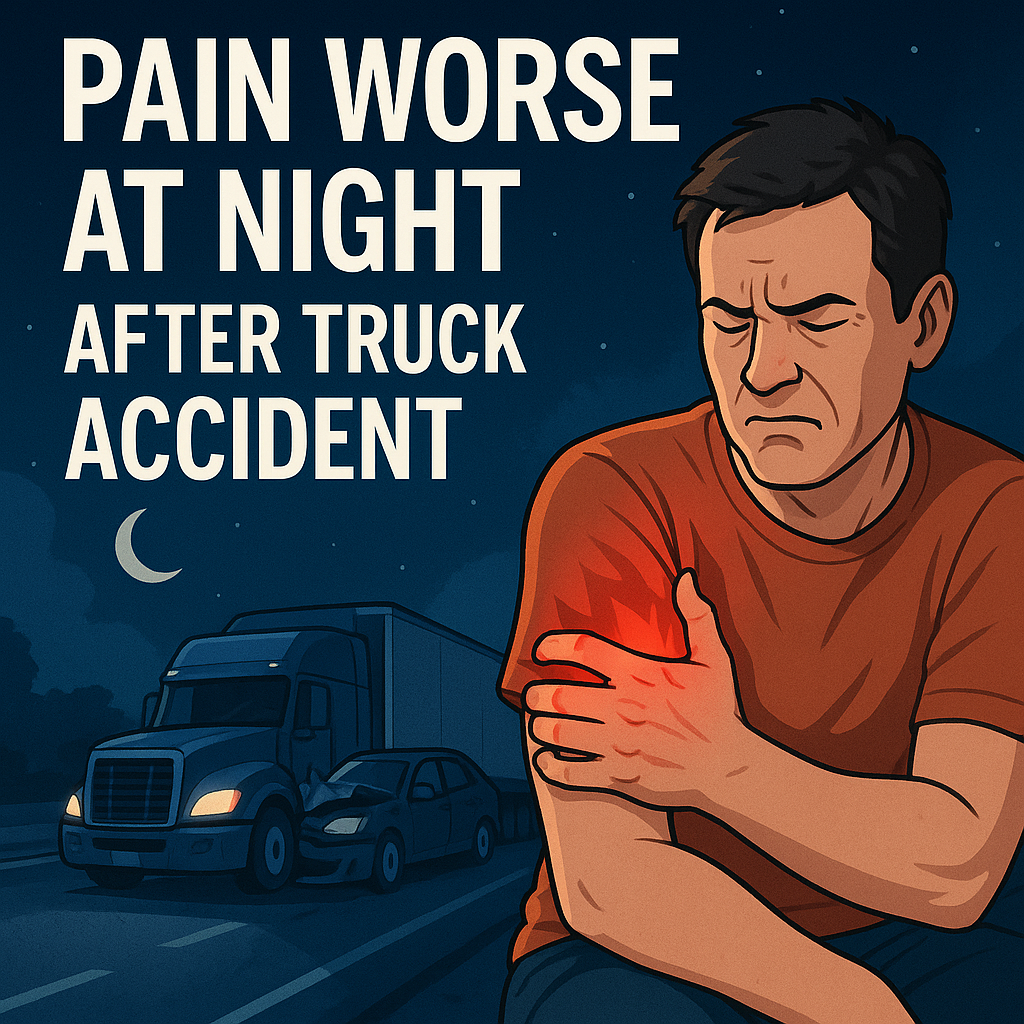
Pain That Feels Worse at Night After Truck Accidents
Experiencing pain after a truck accident is not uncommon, but many individuals notice an unexpected pattern: their discomfort seems to intensify during the night. This phenomenon, where pain is worse at night after a truck accident, can be confusing and worrisome. Understanding why this might happen and how symptoms can evolve over time is crucial for anyone seeking insight into their post-accident experience.
Why Symptoms Can Appear After Truck Accidents
Truck accidents subject the human body to tremendous forces. Even collisions that may seem minor can result in a range of physical responses. In the aftermath, the body often produces adrenaline and other stress hormones. These natural chemicals can briefly mask pain and other symptoms, leading some individuals to feel relatively unscathed immediately following the incident.
As hours or days pass, the initial shock subsides, and various symptoms may begin to surface. This delayed onset is due to several factors:
– Muscular Response: Muscles often tense up to protect vital areas during impact. This tension can result in soreness or stiffness later.
– Soft Tissue Strain: Ligaments, tendons, and other soft tissues may stretch or suffer microtears, which might not be felt until inflammation sets in.
– Nervous System Reactions: Nerve irritation or impingement from trauma can cause pain patterns that only become evident with rest.
– Inflammatory Response: The body mounts an inflammatory response to heal microscopic and macroscopic injuries. This inflammation typically increases with time, often peaking after the initial injury.
Overall, the complexities of how the body responds to trauma mean that symptoms can surface hours or even days later, leaving many patients confused about the timing and nature of their pain.
Common Symptom Patterns
Everyone’s response to an accident is unique, but several symptom patterns are frequently reported by individuals involved in truck accidents. Importantly, these patterns can emerge without any immediately noticeable signs:
– Delayed Soreness and Stiffness: Many people report minimal discomfort right after the accident, followed by growing stiffness and soreness in the neck, back, or shoulders as time progresses.
– Localized Pain: Pain may occur in specific areas, such as the lower back, hips, or knees, even if the rest of the body feels fine.
– Headache or Migraine Onset: Headaches may develop after a period of time, in relation to neck strain or stress.
– Radiating Discomfort: Some individuals experience aching or tingling that travels down the arms or legs, possibly as a result of nerve involvement.
– Nighttime Worsening: A frequent complaint is that pain feels worse at night after a truck accident. This is particularly true for muscular and soft tissue injuries, which may stiffen during periods of inactivity.
It is important to remember that symptom patterns can differ by person and may be influenced by the nature and severity of the accident.
Why Symptoms Can Change Over Time
The body’s healing process is dynamic, and the way symptoms are experienced can change significantly in the days and weeks following a truck accident:
– Inflammation Timeline: Inflammatory chemicals increase as the body begins the repair process, often resulting in heightened discomfort after the first 24-72 hours.
– Muscle Guarding: Protective muscle spasms may initially mask deeper injuries but can intensify as the body grows fatigued or as swelling increases.
– Posture and Movement: As people return to daily activities, they may compensate for sore areas, sometimes causing new aches in other locations.
– Sleep Disruption: Lack of quality sleep can amplify sensitivity to pain. Nighttime impairs distraction, making pain signals more noticeable.
– Psychological Factors: Stress, anxiety, and worry (often elevated after an accident) may contribute to the perception of increased pain, particularly at rest or during quiet nighttime hours.
This evolving symptom landscape explains why some people report marked changes in their discomfort, including reports of “pain worse at night truck accident” weeks after the original event.
When People Typically Start Monitoring Symptoms
Awareness of symptoms often sharpens as the immediate aftermath of the accident passes. Many people are initially focused on practical concerns, such as speaking with law enforcement, contacting insurance, or arranging transportation. Once these priorities are addressed, attention often turns inward.
There are several key periods when individuals commonly begin to monitor their bodies more closely:
1. First Night or Next Morning: Discomfort may become obvious when trying to unwind or sleep, especially as the protective effects of adrenaline fade.
2. Days 2–3: This timeframe typically coincides with the body’s peak inflammatory response, leading to increased pain or stiffness.
3. Return to Routine Activities: Activities that require bending, twisting, or prolonged sitting (such as driving or desk work) can reveal new discomfort.
4. Persistent Discomfort at Night: Individuals often pay more attention to symptoms that worsen after lying down, when distractions are minimized, and when pain can interfere with sleep quality.
These stages highlight the varied and unpredictable nature of post-accident symptoms, especially when pain is notably worse during nighttime hours.
Neutral Closing Paragraph
Experiencing changes in pain patterns, particularly when pain feels worse at night after a truck accident, is a common report among individuals recovering from collisions. The onset, intensity, and timing of symptoms can fluctuate due to several physiological and psychological factors. Paying attention to these sensations allows individuals to better understand their bodies following traumatic events and to communicate more effectively with professionals if and when they decide to seek further assistance. Being informed about the ways that pain can change over time helps set appropriate expectations for the recovery journey and underscores the importance of personal observation in the post-accident period.