
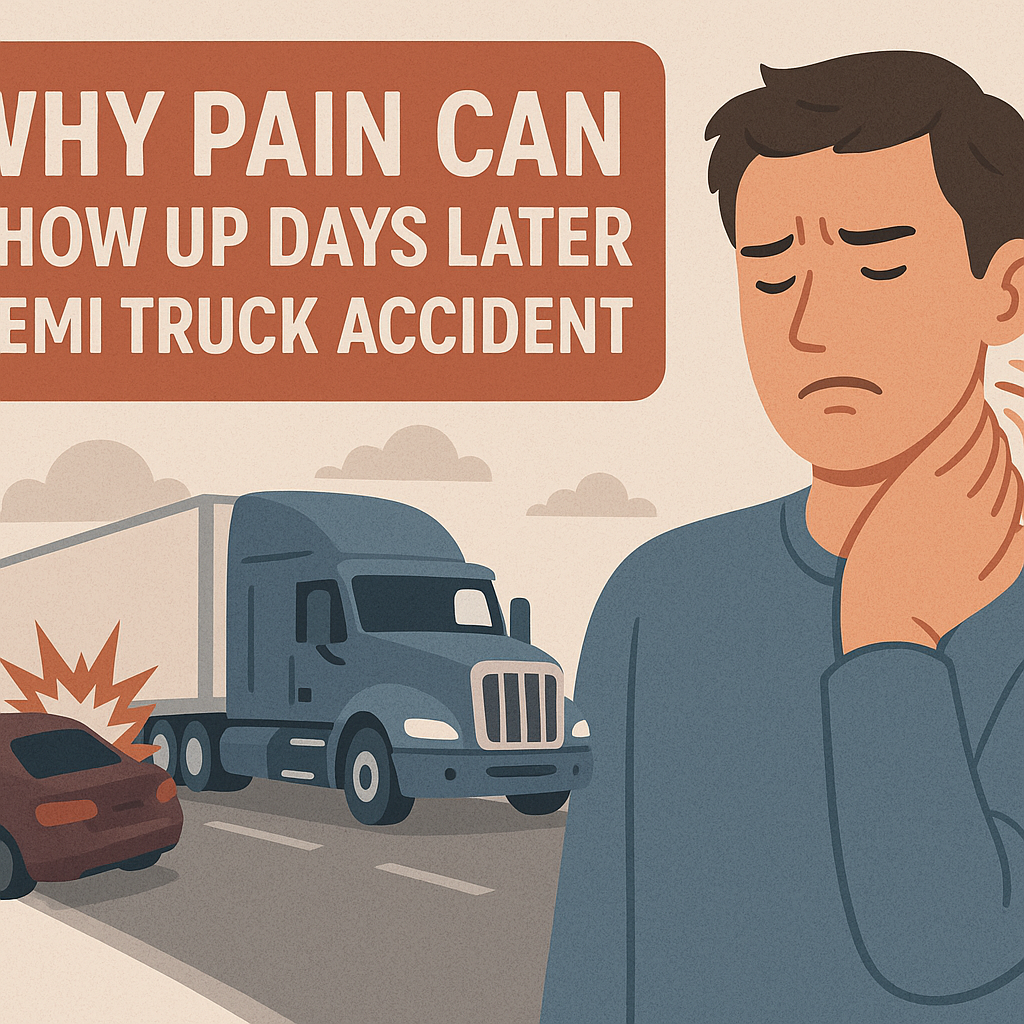
Why Pain Can Show Up Days After a Semi Truck Accident
In the immediate aftermath of a semi truck accident, the priority is usually safety, reporting the incident, and checking for obvious injuries. Many people walk away from these frightening events believing they have escaped serious harm, only to find that pain and other symptoms can show up days—or even weeks—later. This delayed onset can be confusing and distressing. Understanding why “pain shows up days later semi truck” accidents is an important part of recognizing and responding appropriately to post-accident experiences.
Why Symptoms Can Appear After Truck Accidents
The human body is complex and responds in multifaceted ways to trauma. Semi truck accidents often involve high-impact forces that exert significant strain on muscles, bones, nerves, and soft tissues. Immediately following an accident, adrenaline and shock can mask pain and discomfort. This natural reaction allows people to focus on immediate threats and safety, but it often conceals underlying physical issues.
After the initial adrenaline and stress response abates, several processes can lead to the delayed appearance of symptoms:
– Physical Damage Progression: Some injuries from truck accidents, such as internal bruising, whiplash, or microtears in soft tissue, may take time to become noticeable. Swelling and inflammation can increase gradually as a body part responds to injury.
– Nervous System Response: The nervous system may become hypersensitive after a traumatic accident. This sensitization can cause pain signals to emerge hours or days after the initial incident.
– Psychological Impact: Emotional responses to a serious accident—such as anxiety or stress—can influence physical sensations and awareness of pain. The mind may “turn up the volume” on pain or discomfort as the individual processes the event.
These natural responses help explain why pain often doesn’t appear right away.
Common Symptom Patterns
It’s important to recognize that everyone reacts differently to physical trauma, and there is no universal pattern for how or when symptoms will develop after a semi truck accident. However, some common trends are frequently reported:
– Delayed Muscle Stiffness: Many people notice growing stiffness or soreness in the neck, shoulders, or back one to two days after the accident. This may be due to soft tissue strains that were not immediately apparent.
– Headaches: Head pain and tension can develop hours or days post-accident. This could be a response to stress, minor concussions, or muscle tension.
– Abdominal Pain or Bruising: Sometimes, tenderness or bruising in the abdomen or chest manifests later, as internal tissues become inflamed or bruised.
– Tingling or Numbness: Nerves compressed during the incident may not cause noticeable symptoms until inflammation increases, leading to tingling, numbness, or weakness in the limbs.
– Psychological Symptoms: Disturbed sleep, anxiety, or mood changes can take days or weeks to surface as the full emotional impact of the accident sets in.
These symptom patterns provide useful context for why “pain shows up days later semi truck” incidents are so common.
Why Symptoms Can Change Over Time
One of the most perplexing aspects of post-accident recovery is that symptoms can not only appear late but also evolve or intensify with time. There are a few reasons behind this progression:
– Inflammation Peaks Later: Swelling from muscle strains or internal bruises often builds over 24–72 hours after the trauma. As inflammation reaches its peak, pain can increase, stiffen joints, and reduce mobility.
– Secondary Injury: Compensating for an initial injury may lead people to move differently, potentially straining other body parts. Over days or weeks, this can cause new symptoms to appear unrelated to the initial pain.
– Delayed Nerve Responses: Nerve-related symptoms, like tingling or shooting pain, sometimes take time to surface as tissue swelling puts increasing pressure on nerves.
– Emotional Processing: Emotional shock can blunt awareness of pain or discomfort initially. As psychological processing begins, some individuals become more attuned to their bodily sensations, making pain seem to “appear” later.
This shifting landscape of symptoms reinforces the importance of ongoing awareness and monitoring after a semi truck accident.
When People Typically Start Monitoring Symptoms
In many cases, the focus in the immediate aftermath of a semi truck accident is on urgent concerns: checking for serious injuries, exchanging information, and talking to police. Pain or discomfort that is not severe may be overlooked. It’s common for people to start monitoring their symptoms more closely in the hours or days that follow, particularly if:
– Pain Increases or Spreads: New or intensifying symptoms draw more attention and prompt self-monitoring.
– Normal Activities Become Difficult: Difficulty with routine tasks like turning the head, bending, or walking often triggers a reevaluation of physical wellbeing.
– Witnesses or Passengers Mention Delayed Pain: Hearing similar stories from others may encourage awareness of one’s own delayed symptoms.
– Advice from Friends, Family, or Professionals: People often begin to track symptoms more carefully after receiving information about the possibility of delayed pain following truck accidents.
By the end of the first day to the middle of the first week, most individuals affected by a semi truck accident have become more attuned to any changes in how they feel, recognizing that the body can take time to reveal the full impact of the event.
Conclusion
Understanding why pain can show up days after a semi truck accident helps individuals navigate the aftermath more confidently. The delayed emergence and evolution of symptoms are common and stem from the body’s complex response to trauma, the psychological impact of an accident, and the nature of certain injuries. Remaining aware of these factors encourages responsible self-monitoring and fosters a better understanding of how the human body responds to high-impact events. Recognizing that the effects of a truck accident may unfold gradually allows those involved to respond thoughtfully as they move forward.