
Why Snow and Ice Cause Truck Accidents
Introduction to the Topic and Why It Matters in Truck Accidents
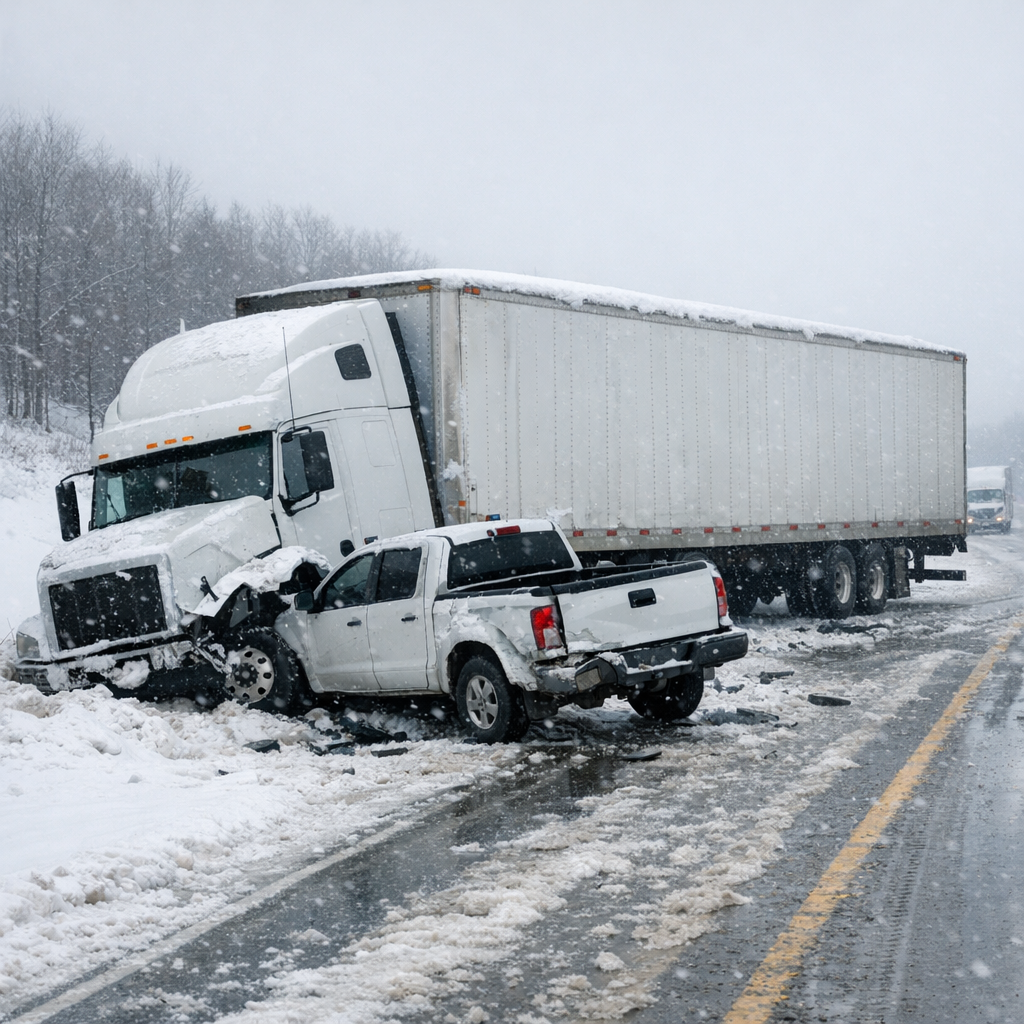
Snow and ice are significant factors in road safety, especially for large vehicles like trucks. A snow truck accident can be more dangerous than accidents involving smaller vehicles due to the size, weight, and stopping distance of trucks. Understanding why winter weather increases the risk of truck accidents is essential for both drivers and the general public. These insights can help improve safety and awareness during the colder months.
Key Information Related to the Topic
Important Factors, Causes, or Details
Snow and ice directly impact road conditions in several ways:
– Reduced Traction: Ice and packed snow decrease the friction between truck tires and the road, making it harder for drivers to control their vehicles.
– Longer Stopping Distances: Trucks already need more distance to stop than cars. This need is amplified on slippery surfaces.
– Decreased Visibility: Snowfall and blowing snow can limit visibility, making it tough for truck drivers to see other vehicles, road signs, and obstacles.
– Possible Equipment Failure: Cold temperatures can affect a truck’s brakes, tires, and other equipment, potentially leading to mechanical issues.
– Black Ice: This thin, hard-to-see layer of ice is especially hazardous since it is nearly invisible to drivers.
Potential Impacts or Outcomes
Accidents involving trucks on snow and ice can lead to:
– Traffic Disruptions: These accidents often block multiple lanes, leading to delays.
– Property Damage: Collisions with trucks can cause significant damage to vehicles and infrastructure.
– Risk of Injury: Due to the size and weight of trucks, injuries can occur, even in lower-speed accidents.
– Complicated Recovery: Cleanup and towing operations may be more difficult in winter weather.
General Considerations After a Truck Accident
After a snow truck accident, the first priority should always be safety. It is important to move vehicles out of active traffic if possible and to seek medical attention if anyone may be injured. Reporting the accident to authorities and documenting the scene (safely, if conditions allow) with photos or notes can also be helpful.
Awareness of Options and Support Available After an Accident
There are various avenues for support after a truck accident. Many individuals explore medical, insurance, or even legal assistance to help manage the aftermath. Professional advice can be helpful in understanding next steps, especially in cases where property damage or injuries are involved.
Closing Informational Summary
Snow and ice present unique challenges for truck drivers and all road users. By understanding how winter conditions contribute to accidents, drivers and communities can be better prepared and take precautions to reduce risks. After a snow truck accident, following safety steps and being aware of available resources can make the recovery process smoother and less stressful.