
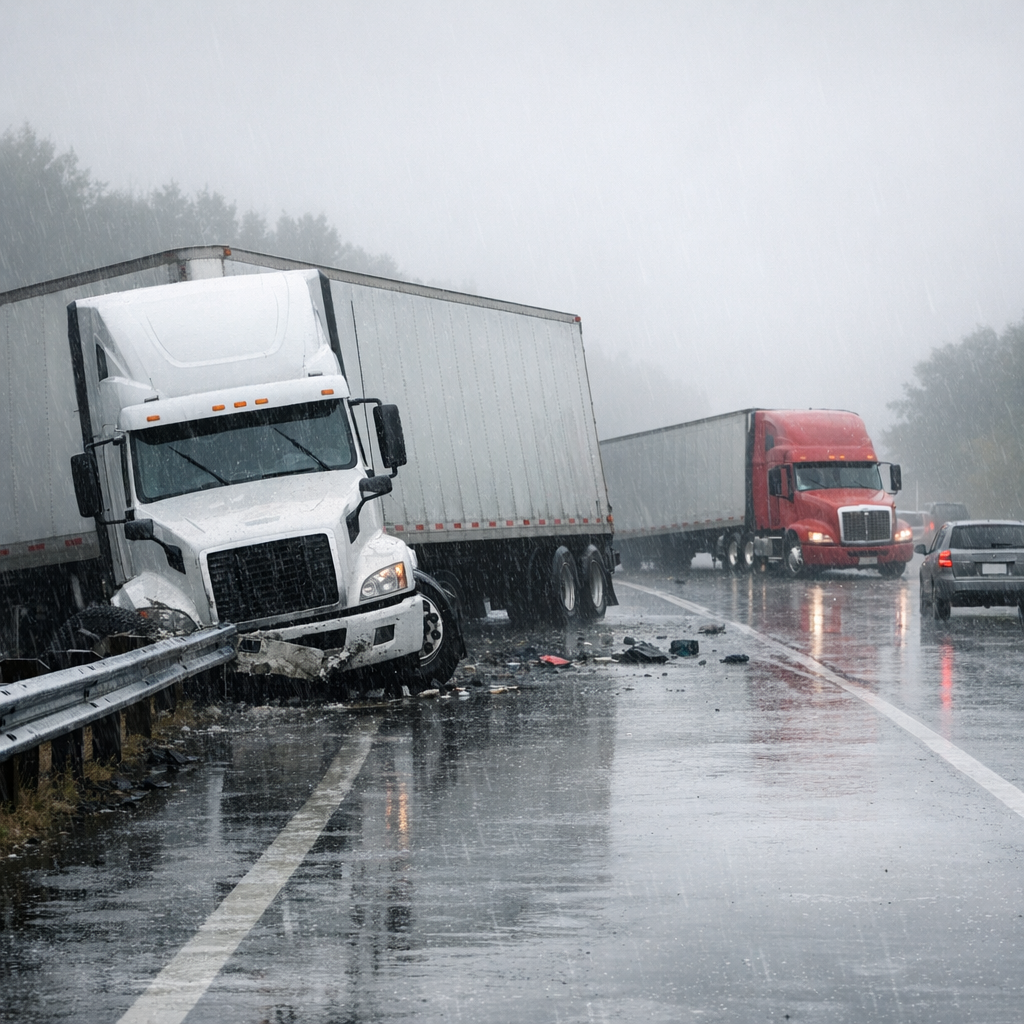
How Rain Impacts Semi Truck Driving Safety
Introduction to the Topic and Why It Matters in Truck Accidents
Rainy weather is one of the most common conditions that impacts road safety for all vehicles, but it can be especially challenging for semi trucks. Because of their size and weight, trucks require different handling than passenger vehicles, so wet conditions pose unique risks. Understanding these risks is vital, as rain can significantly increase the likelihood of a truck accident, with serious consequences for everyone on the road.
Key Information Related to the Topic
When it comes to rain and semi truck safety, several factors come into play. Awareness of these factors can help truck drivers, other motorists, and the public recognize the increased risks during rainy weather.
Important Factors, Causes, or Details
– Reduced Traction: Rainwater on the road causes tires to lose grip, increasing the chance of skidding or hydroplaning, especially for a heavy truck with a large surface area.
– Longer Stopping Distances: Semi trucks already need more time and space to stop. On wet roads, it takes even longer, raising the risk of rear-end collisions.
– Visibility Challenges: Rain can fog windshields and obscure mirrors, while road spray and glare further limit what drivers can see.
– Load Stability: Shifting cargo can be a bigger risk when a truck moves suddenly to avoid water hazards or when braking on slick roads.
– Driver Fatigue and Stress: Navigating in rain requires higher concentration, which can be tiring over long distances.
Potential Impacts or Outcomes
– Increased Accident Risk: All these factors can lead to a greater risk of jackknifing, rollovers, or collisions with other vehicles.
– Property Damage: Slippery roads can result in loss of control, causing accidents that damage cargo, trucks, and other vehicles.
– Injury Potential: Collisions involving semi trucks in the rain may lead to significant injuries due to the vehicles’ size and mass.
General Considerations After a Truck Accident
If involved in a truck accident—whether as a driver, passenger, or bystander—prioritize safety first. Check for injuries, move to a safe location if possible, and contact emergency services. Gather as much evidence as you can, such as photos and witness information, as these details may be helpful later.
Awareness of Options and Support Available After an Accident
After a truck accident in the rain, people may benefit from consulting with insurance providers, and if needed, medical professionals and legal advisors. Various resources exist to help understand next steps, address injuries, or manage vehicle damage. It’s useful to seeking information and support to make informed decisions.
Closing Informational Summary
Rain increases the risk of truck accidents due to several key factors, including reduced traction and lower visibility. Awareness and caution are essential for all road users during wet weather. If a rain-related truck accident occurs, knowing what steps to take and where to seek guidance can help people manage the situation calmly and safely. By understanding the risks and considerations, everyone can contribute to safer roads, even in challenging conditions.