
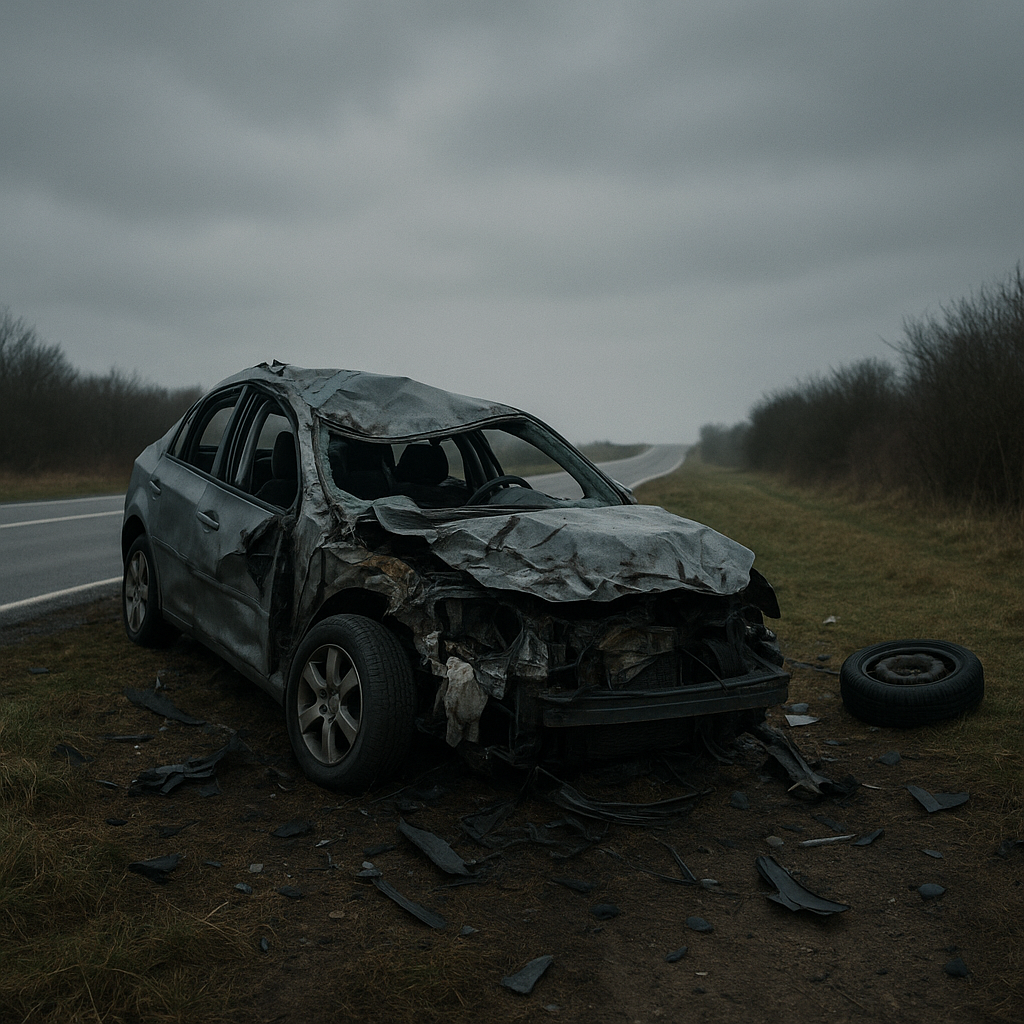
Why Does It Feel Worse on Anniversaries of the Crash?
Why This Question Is Common After Severe Accidents
Each year, on the anniversary of a crash, it’s not unusual for difficult emotions to resurface. For many, the anticipation leading up to “that day” brings heightened anxiety, sadness, or even physical symptoms—sometimes more intense than before. This experience often leads people to quietly ask themselves, “Why does it feel worse on anniversaries of the crash?” The question is common because major accidents are not only physically and emotionally traumatic—they also leave a mark on memory and identity. Many people find that as the date returns, so do vivid recollections or waves of feeling that seem disproportionate to the passage of time.
Anniversaries of traumatic events are frequently recognized as significant milestones—by individuals, families, and communities. In the aftermath of severe accidents, these dates transform from ordinary days into reminders of loss, survival, or disruption. People may wonder why a particular 24-hour period each year carries such emotional weight, even after months or years of apparent healing. This question is a natural response to the collision between an ordinary date and the personal meaning it now holds.
Clear Neutral Explanation
The feeling of things being “worse on crash anniversary” is linked to several well-understood psychological processes. Human memories are not just catalogued by content, but by time and context. When a traumatic event occurs, the mind tends to encode the details—sights, sounds, and especially the date—in a way that can be more easily triggered later.
Anniversaries act as cues for these memories. The body and mind can “remember” trauma on a subconscious level, preparing for a possible repeat of the experience, even if it’s unlikely to recur. This is one aspect of what is called “anniversary reactions.” These reactions can manifest as increased sadness, anger, sleep problems, anxiety, or physical unrest near the date of the event. The anticipation or buildup in the days or weeks leading to the anniversary sometimes makes these feelings sharper.
There is also a social and cultural element to anniversary reactions. Society marks meaningful dates—birthdays, holidays, national tragedies—with rituals or remembrance, which reinforces the way these dates stand out compared to others. For someone involved in a crash, the anniversary is often one such date. Even if no one else remembers, the individual who experienced the event feels the passage of time in relation to that date. The intensity of these emotions is not proof of weakness or “moving backwards,” but rather a reflection of how the mind handles the memories of trauma.
Helpful Emotional Context
Anniversaries amplify emotion because they connect a person’s present-day self with who they were at the time of the accident. This connection can bring a flood of feelings—survival, loss, anger, gratitude, confusion—sometimes all at once. The body can react with familiar sensations from the time of the crash, such as tension, restlessness, or fatigue. In this way, anniversary reactions are somewhat unavoidable; they’re a product of deep, instinctual processes meant to help someone make sense of their experience and the changes it brought.
For many, the anniversary is not only a reminder of what happened, but also what didn’t happen—the life that could have unfolded differently. This can make reflection bittersweet or even painful, emphasizing what was lost alongside what was survived. People might find themselves revisiting old “what if” questions, which can intensify emotions further. This is all part of the mind and heart’s way of processing significant change.
Common Misconceptions
One common misconception is that feeling worse on the crash anniversary is a sign of not coping or failing to “get over it.” In reality, it is a normal response to a significant trauma; it is not a judgment on someone’s healing or strength. Another misunderstanding is that the anniversary reaction should lessen in a predictable, linear way over time. In fact, some years might feel heavier than others, depending on other circumstances, personal changes, or seemingly unrelated stresses.
There is also a belief that only people with lasting injuries or PTSD will react strongly to crash anniversaries. While some people do experience intense symptoms, it is common for anyone involved—even those who consider themselves “fine”—to notice an emotional shift as the date returns. The mind’s way of honoring significant events is not limited to physical or obvious signs of trauma.
Finally, some assume that ignoring the date will prevent any reaction. In practice, trying to suppress awareness does not stop the deeper mental processes involved; reactions may occur subconsciously or appear in indirect ways.
Closing Paragraph
Feeling worse on the crash anniversary is a well-documented and deeply human reaction to how memory and emotion interact with time. The anniversary acts as a powerful reminder—sometimes consciously, sometimes beneath the surface—of an event that shaped a person’s life. These feelings are not a judgment of progress, nor a step backward, but rather a reflection of how meaningful events are woven into the fabric of memory. Each anniversary brings its own mix of recollection and emotion, and acknowledging the significance of the date can be part of the unique process of living with and moving beyond a traumatic event.